As an Amazon Associate I earn from qualifying purchases. Links marked “Affiliate link” may earn us a commission at no extra cost to you. Learn more.
Quick answer
A wardrobe closet is a freestanding unit with a hanging rod and often shelves, used where a room has no built-in closet or too little of one. The main choices are an open steel rack, a rack with a fabric cover and a wood cabinet wardrobe. What decides the purchase is hanging length, shelf capacity, stability and how much floor it takes.
The listings we read on Amazon on 2026-09-30 give portable steel wardrobes about 17.7 to 18.2 inches deep, about 52 to 67 inches wide and about 66 to 71 inches high. Weights are about 8.6 to 14.5 pounds for the ones with a listed weight, and one listing states a maximum load of 600 pounds. We have not tested any of them, and these figures come from the listings.
If you own long coats and dresses, check the hanging length. If you mostly fold clothes, a chest of drawers may serve you better; see chest of drawers.
Open rack, covered rack or cabinet
Open steel rack. Light, cheap and easy to move. It shows everything, so it suits neat wardrobes or a spot behind a screen. It can wobble if the frame is thin.
Covered rack. A steel frame with a fabric cover keeps dust off, hides clutter and looks tidier. The cover may be a non-woven fabric that zips, and it can trap moisture if clothes are damp. A covered rack of 66.9 by 17.7 by 65.7 inches, like one we read, weighs about 8.6 pounds.
Cabinet wardrobe (armoire). A wood or engineered-wood cabinet with doors is sturdier and hides everything, but it is heavy and needs door swing. It is closer to furniture than to a rack, and it usually costs more.
Choose by how much you can tolerate seeing your clothes, and how much you need to move the piece.
Measure your clothes
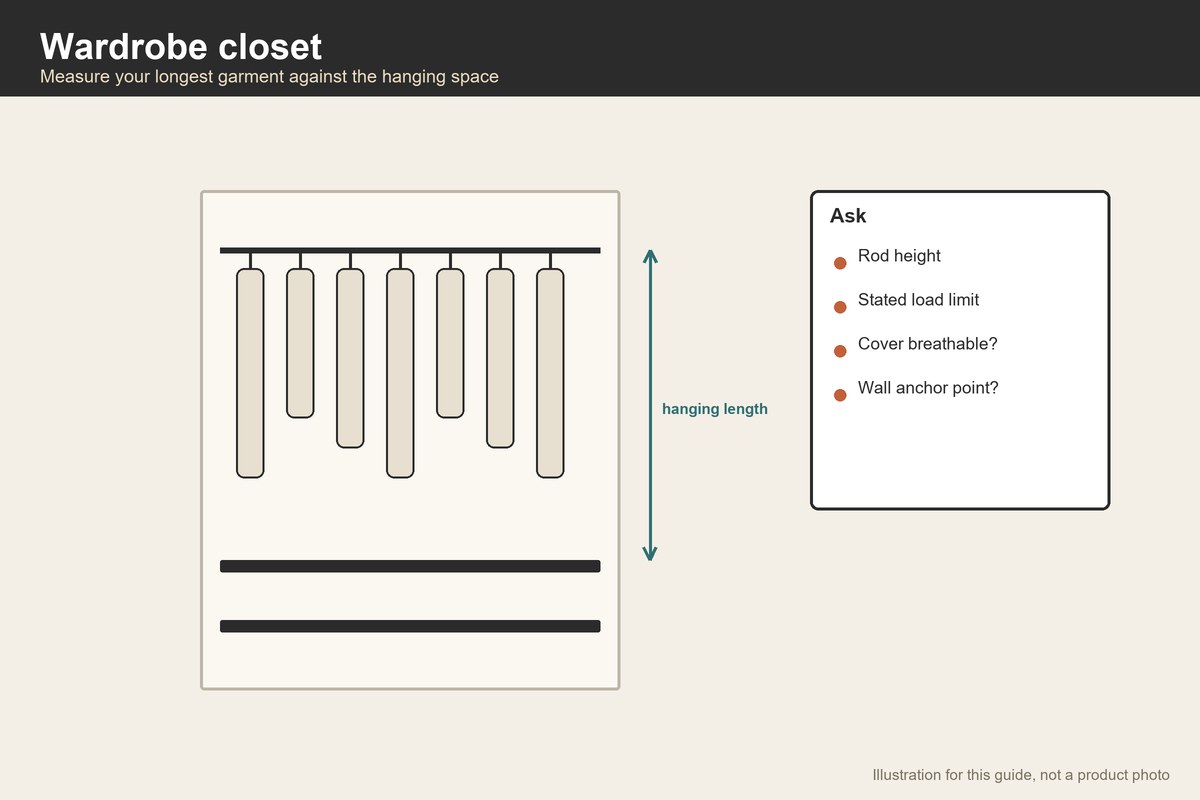
Measure the length of your longest hanging item, from the top of the hanger to the hem. A shirt is about 30 inches, a dress or long coat may be 45 to 55 inches or more. The hanging space below the rod must exceed that or the hem will drag. A rack that is 65.7 inches high with a rod near the top may leave about 60 inches for hanging. That is our estimate; check the listing for the rod height.
Count the hangers. A common rule of thumb is that adult clothes take about 1 to 2 inches of rod length per hanger, so a 50 inch rod holds roughly 25 to 50 items. Treat that as an estimate, since thick coats take more.
Depth and width
Most racks are about 18 inches deep, which suits a standard hanger. A wardrobe that is 17.7 inches deep and 51.7 inches wide takes about 6.4 square feet of floor (17.7 × 51.7 = 915 square inches ÷ 144). Compare that with a chest of drawers of 31.5 by 15.7 inches, which takes 495 square inches or about 3.4 square feet.
Wide units can leave the rod sagging. Check the rod diameter; one listing we read mentions a 19 millimeter steel pipe. A thicker pipe is stiffer, though the listing may not give its wall thickness.
Weight capacity and stability
A loaded rack is top heavy. Look for a stated maximum load, and put heavy items low. The listings we read state 600 pounds for one steel wardrobe; others give none. If a listing gives none, treat it as unknown. A light rack of 8.6 pounds with a big load can tip if the base is narrow.
Anchor a tall wardrobe to a wall where possible. The Consumer Product Safety Commission’s Anchor It campaign explains why anchoring furniture matters where children live. Many racks have no anchor point, so place the wardrobe against a wall and keep children from climbing it. A cabinet wardrobe usually comes with an anchor kit; use it.
Assembly and moving
Steel racks assemble with tubes and connectors, usually without tools, in 20 to 40 minutes. Cabinet wardrobes take longer and need two people. Racks are easy to disassemble for a move; cabinets are heavier.
Check the floor. Feet can scratch wood, and a heavy loaded rack can dent soft flooring. Add pads.
Moisture and moths
Closed covers trap moisture. Do not hang damp clothes. A breathable cover or a gap at the bottom helps. If moths are a concern, use cedar blocks or sachets, and follow product directions.
Materials and emissions
Steel racks avoid composite wood. Cabinet wardrobes often use engineered wood; federal rules limit formaldehyde emissions from composite wood products sold in the United States, and listings may state compliance. If a listing does not, ask, especially for a closed cabinet where clothes sit close to the panels. Air the piece before use.
Placing it in the room
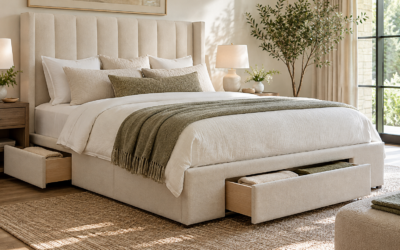
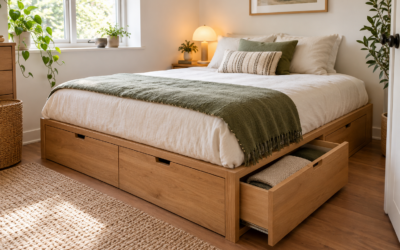
Put the wardrobe on a wall that is not needed for the bed or a door. Leave room to open it: a cabinet with doors needs swing space equal to its door width; a rack needs about 24 inches in front to reach in. The U.S. Access Board’s accessible-route guidance uses 36 inches as a minimum clear width for a path, with 32 inches at short obstructions. That is for public accessible design, not your bedroom, but a similar path is comfortable. See bed frame with storage for storage that stays under the bed and nightstands for the bedside.
A worked example
These are invented numbers for planning. A bedroom is 9 feet by 10 feet (108 by 120 inches). A full bed of 75 by 54 inches sits along the 120 inch wall, leaving 120 − 75 = 45 inches at its foot. You want a wardrobe 18.2 inches deep and 51.7 inches wide against the 108 inch wall.
Reach: you need about 24 inches in front to reach in. 24 + 18.2 = 42.2 inches, and the space at the foot of the bed is 45 inches, so 45 − 42.2 = 2.8 inches remain. That is too tight to walk past when the wardrobe is in use.
Option: place the wardrobe on the 108 inch wall, opposite the bed’s side. The bed is 54 inches wide, leaving 108 − 54 = 54 inches across; minus 18.2 inches for the wardrobe gives 35.8 inches, near the 36 inch reference, and you can reach in from the side. Or choose a covered rack 17.7 inches deep and 66.9 inches wide: it needs 66.9 inches of wall but has the same depth. The wall length is what limits you here.
Questions to ask before you order
Ask for the height of the hanging rod, the distance between shelves and the rod’s diameter. Ask whether the rack has adjustable feet and whether it can be anchored to a wall. Ask whether the cover is breathable and whether it can be washed. Ask what the load limit refers to, such as the rod or the whole frame. If a listing shows several sizes, confirm that the photos match the size you choose.
Organizing the space
Hang long items on one side and short items on the other, so that you can use the space under short items for shoes or bins. Use slim hangers to increase capacity, and keep heavy coats near the ends where the frame is strongest. Fold knitwear on shelves rather than hanging it. Leave a few inches of space so that clothes can breathe. Keep a small hamper nearby for items that have been worn once.
Assembly and checks
Lay out the parts and count the connectors before you start. Assemble on a flat floor, and tighten the joints firmly. Check that the rack is square by measuring the diagonals: if they differ by more than a small amount, adjust it. After loading, push gently on the top corners to check for wobble. Recheck the joints after a week.
Mistakes to avoid
- Ignoring hanging length. Measure your longest item.
- Skipping the load limit. Look for a stated capacity.
- Overloading the top. Keep heavy items low.
- Not leaving reach space. Add about 24 inches in front.
- Trapping moisture. Do not hang damp clothes in a covered rack.
- Buying by looks. Check depth and rod diameter.
When to skip a wardrobe
If you have a closet with unused space, closet organizers may be cheaper. If you own few hanging clothes, a chest of drawers or a wall rail may do. For entry storage, see shoe storage cabinet.
Related guides
See chest of drawers, buffet cabinet and best storage cabinets for home office.
Frequently asked questions
How deep is a wardrobe closet?
The racks we read are about 17.7 to 18.2 inches deep, which suits standard hangers.
How much can a portable wardrobe hold?
Check the listing. One states 600 pounds; others give none.
Do covered wardrobes protect clothes?
They keep off dust but can trap moisture. Do not hang damp clothes.
Should I anchor a wardrobe?
Yes for cabinets, and place racks against a wall if children are around.
Is a rack better than a cabinet?
A rack is lighter and cheaper; a cabinet is sturdier and hides everything.
Bottom line
Choose a wardrobe closet by hanging length, depth and stated capacity. Measure your longest garment, leave room to reach in and skip it if a chest of drawers suits your clothes better.
Products worth checking
We have not tested these products. Sizes and features come from the Amazon listings, checked on September 30, 2026; where a listing does not say, we say so.
HOMIDEC Wardrobe Closet, Portable Clothes Rack with 4 Tiers Shelves
The listing gives 4 shelf tiers; listed 600 lb maximum recommendation. We re-opened the page on September 30, 2026 and found these figures; other details are on the product page.
- Good for: a steel rack with shelves and a hanging rod.
- Keep in mind: we did not read its dimensions, so check the size on the page.
VTRIN Portable Closet for Hanging Clothes, 67 Inch Wide
The listing gives 66.9 x 17.7 x 65.7 in; 8.6 lb. We re-opened the page on September 30, 2026 and found these figures; other details are on the product page.
- Good for: a wide covered rack for hanging clothes.
- Keep in mind: it is light and has no stated load limit in the text we read.
LOKEME Wardrobe Closet, Portable Closet for Bedroom
The listing gives 51.7 x 18.2 x 70.6 in; 14.5 lb. We re-opened the page on September 30, 2026 and found these figures; other details are on the product page.
- Good for: a taller rack for longer garments.
- Keep in mind: the text we read does not state a load limit.
Sources checked
- Anchor It
- Formaldehyde emission standards for composite wood products
- Accessible routes guide
- HOMIDEC Wardrobe Closet, Portable Clothes Rack with 4 Tiers Shelves
- VTRIN Portable Closet for Hanging Clothes, 67 Inch Wide
- LOKEME Wardrobe Closet, Portable Closet for Bedroom
Specifications checked on September 30, 2026. Product details and availability can change, so confirm on the product page before you buy.