As an Amazon Associate I earn from qualifying purchases. Links marked “Affiliate link” may earn us a commission at no extra cost to you. Learn more.
Quick answer
A day bed is a bed frame designed to look and function somewhat like seating during the day, usually through raised sides, cushions and placement against a wall. It works best where one person may sleep and the room also needs a lounge-like surface. It is not a substitute for every sofa, sleeper sofa or wall bed. Choose it when the fixed mattress footprint fits the room and the day-to-night routine is simple.
Sleep Foundation describes daybed frames as versatile, multifunctional frames for seating and sleeping, commonly with a backrest and armrests; some include a trundle or under-bed storage. That makes them useful in guest rooms, offices and compact living spaces, but it also means the frame remains present all day. Measure it as a bed, not as a decorative bench.
Choose the daybed role
Ask one direct question: what is this furniture doing most days? If it is primarily a guest bed with occasional reading, a simple daybed may be ideal. If it is the main family sofa, a mattress-plus-cushion setup may not provide the seating depth, back support or number of seats you expect. If the top priority is reclaiming floor space, a Murphy bed can be the better category.
| Room need | Best starting comparison |
|---|---|
| One sleeper plus lounging | Daybed |
| Two occasional sleepers | Daybed with compatible trundle |
| Open floor by day | Murphy bed |
| Everyday multi-person sofa seating | Sofa or loveseat |
| Storage plus one sleeper | Daybed with storage |
Use our daybed-with-storage guide where drawers are central, our full size daybed guide for a wider single sleeper, and our trundle guide when a second lower bed is the goal.
Measure the full frame and living zone
Record outside width, depth, height, mattress requirements and any trundle or drawer projection. Then mark a sitting zone in front of the frame, a route to the door, and the floor needed to change bedding. Add the cushions you plan to use; thick back cushions reduce usable seating depth even though they look inviting in a photo.
The original daybed reality check is to set up a mock wall with the planned depth, then sit, stand, walk past it, and open the room door. Repeat with the intended desk chair or coffee table. If daily use feels like navigating around a bed, the layout needs revision.
Mattress and styling should support the same job
Follow the manufacturer’s mattress requirements. A mattress selected for sleep comfort may need a coverlet and supportive cushions to work visually as seating; conversely, too many decorative pillows can turn nightly use into a storage chore. Keep bedding simple, washable and easy to remove. Do not add a foundation or box spring unless the frame documentation allows it.
If a trundle is included, confirm that the lower mattress has a separate height limit and that the lower frame can travel across your finished floor. A trundle is a second bed, not a storage drawer.
Choose the size from the sleeper and room, not the label
Daybeds are sold in several mattress formats, and a larger mattress does not automatically produce a better small-room solution. A twin daybed can be compact for one sleeper and leave more wall and walking space. A full size daybed can give a solo adult guest more sleeping width, but its frame can dominate a narrow office or living room. Before comparing styles, identify who will sleep there and how frequently.
Use the manufacturer’s exact dimensions for the mattress, frame and any projection from storage or a trundle. Then map the daybed in its ordinary day position with the cushions you intend to use. A frame can fit against a wall yet still leave too little room to pass a desk chair, open a closet, or reach a window. If the room only works with cushions, bedside tables and doors removed, the daybed is not a good fit.
Back, arms and cushion placement affect usability
The visual appeal of a daybed comes partly from its back and arms. These can create a comfortable lounging corner, but they also set boundaries around the mattress. High sides may feel cozy for reading and restrictive for a person who wants to enter the bed from the side. Open metal rails may make a room look lighter while offering less back support without cushions. Upholstered sides can feel more sofa-like but add another surface to maintain.
Try the planned posture, not only the sleeping position. Sit with a back cushion in place, place your feet where they would naturally rest, stand up, and lie down. Then remove the cushions as you would at bedtime. This small rehearsal shows whether the styling supports the routine or creates a nightly chore. The most successful daybed has a short conversion: fold or remove a small cushion set, straighten washable bedding, and sleep.
Put the daybed in the right part of the room
Against a long wall, a daybed can define a reading or guest zone while preserving the center of the room. Near a window, check curtain movement, ventilation and whether the frame blocks practical access. In a home office, keep the desk’s chair path separate from the front of the daybed so working does not require moving cushions or bedding. In a bedroom, decide whether a daybed is serving a deliberate lounge role or simply standing in for a conventional bed that would work better.
Keep exits and safety devices in view. Furniture should not make a normal route to the door difficult, obstruct switches, or prompt someone to interfere with smoke alarms. The U.S. Fire Administration recommends alarms inside each bedroom, outside sleeping areas and on every level of the home. A calm layout matters more than fitting one more decorative table beside the frame.
Storage and trundle features deserve separate decisions
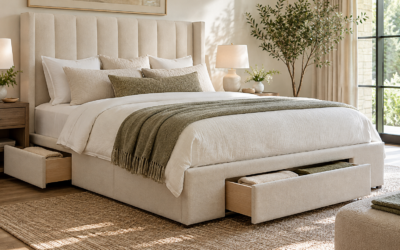
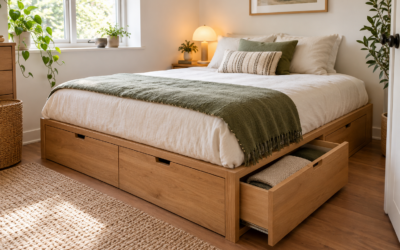
A daybed can be simple, include drawers, or accept a lower trundle. Do not bundle these options together automatically. Storage makes sense when the drawer direction and interior capacity serve a defined need; see our daybed storage guide for the clearance test. A trundle makes sense when a second guest bed is used occasionally and the room has a full roll-out zone; see our trundle-bed guide.
Every extra feature adds a moving part and a measurement. A drawer can collide with a desk chair. A trundle can be blocked by a rug. A lift-up compartment can require removing the mattress. Choose only the features the room will use. A straightforward daybed plus a separate storage cabinet is often more flexible than a highly integrated frame that makes daily access difficult.
Build a realistic day-to-night routine
Set a timer and imagine preparing the room for a guest. Where do decorative cushions go? Is the spare sheet set within reach? Can a bedside drink and phone be placed safely? Is there a lamp or light switch that the sleeper can access without a cord across the floor? In the morning, can the bed be reset quickly enough that the room returns to its daytime role?
This routine is especially important when the daybed sits in a common room. Household members need an agreed place for cushions, blankets and any table that must move. If the routine relies on a hallway, shared dining surface or someone else’s closet, it is fragile. Simplify it before buying by reducing accessories or choosing furniture with a clearer primary role.
Daybed mistakes to avoid
Shopping as if it were a sofa. A daybed’s mattress depth, rails and bedding change how it seats people.
Shopping as if it were a conventional bed. Back and arm rails, cushions and a wall placement change side access and making the bed.
Choosing decorative pillows before planning storage. Pillows that have nowhere to go become clutter at bedtime.
Assuming a trundle or drawers are free benefits. Each one needs its own open-path and access check.
Ignoring the room’s primary use. A fixed mattress surface is a good compromise only when the room really needs both sleeping and relaxed daytime use.
A final daybed decision checklist
- The exact outer frame and mattress dimensions fit the wall and circulation path.
- The intended sleeper can comfortably access the available sides.
- The compatible mattress and support requirements are documented.
- Daytime cushions have a quick, defined bedtime home.
- Any storage drawer or trundle can open in the furnished room.
- The layout keeps routes, doors, lights and alarms usable.
- The daybed solves a real seating-plus-sleeping need rather than imitating a sofa or bed poorly.
Frequently asked questions
Can I use a daybed every night?
Potentially, if the compatible mattress and frame suit the sleeper. Evaluate sleeping comfort and access separately from daytime appearance.
Is a daybed smaller than a sofa?
Not always. A daybed is based on a mattress footprint and can be deeper than a compact sofa. Compare exact outside dimensions and circulation space.
Does every daybed have a trundle?
No. A trundle is a separate lower-bed feature. Confirm whether it is included, compatible and appropriate for the room.
Bottom line
A day bed is a strong multipurpose choice when the room needs a real one-person bed that can look intentional during the day. Measure the fixed frame, decide whether the main job is sleeping or seating, and add storage or a trundle only when their moving parts still work in the room.
Products worth checking
We have not tested these products. Sizes and features come from the Amazon listings, checked on September 30, 2026; where a listing does not say, we say so.
Amazon Basics Twin Daybed and Trundle Bed Frame Set, Steel Slat Support
The listing describes a steel twin daybed with a rolling twin trundle, steel slats on both beds, two locking and two non-locking casters on the trundle, and tools included for assembly. It says the set takes two twin mattresses and gives a weight capacity of 250 pounds.
- Good for: a guest room where you want a plain steel frame and a trundle on casters.
- Keep in mind: the listing does not say the 250 lb limit is per bed, and you should check the trundle’s maximum mattress thickness before buying a mattress.
IDEALHOUSE Twin Daybed with Pop-Up Trundle, Charging Station and LED Light
The listing describes a metal twin daybed with a pop-up trundle, a storage headboard with a charging station and an RGB LED strip. It gives 77 inches long, 45.9 wide and 35.4 high, and 76.8 lb.
- Good for: a room where the second bed should rise to daybed height, with a headboard that holds a charger.
- Keep in mind: at 45.9 inches wide it is about 5.6 inches wider than the Amazon Basics frame (40.3 inches), and we did not find a weight limit in the text we read.
Amazon Basics Full Size Daybed and Twin Size Trundle Bed Frame Set, Steel Slat Support
The listing describes a steel full-size daybed with a rolling twin trundle underneath, steel slats on both beds and tools included for assembly. The measurements table gives 77.3 by 55.3 by 35.4 inches and 71.9 lb.
- Good for: a guest room where the daybed is full size and the second sleeper takes a twin trundle.
- Keep in mind: the trundle is a twin while the daybed is full, so the two beds differ in width; check the maximum mattress thickness before buying mattresses.
Sources checked
Specifications checked on September 30, 2026. Product details and availability can change, so confirm on the product page before you buy.