As an Amazon Associate I earn from qualifying purchases. Links marked “Affiliate link” may earn us a commission at no extra cost to you. Learn more.
Quick answer
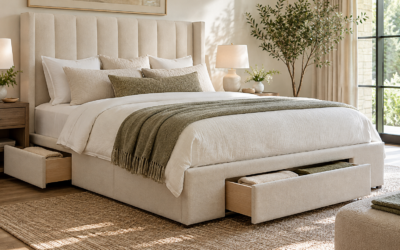
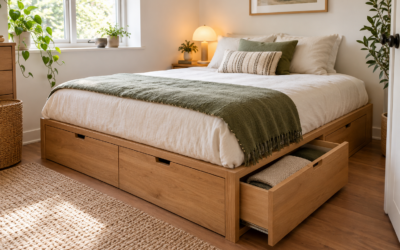
A day bed with storage can reduce clutter when the storage is accessible with the bed made, the drawers open into clear floor space, and the frame still supports the approved mattress correctly. Do not select it because it promises “extra storage.” Compare the actual drawer dimensions, opening direction, clearance, and what you intend to store. Built-in drawers are valuable only if you can open them without moving the room.
Daybeds can be designed with under-bed storage or a trundle, but those are different functions. A trundle supplies another sleeping surface; drawers hold belongings. Some frames combine both, which can make the lower zone more constrained. Read the exact configuration rather than relying on a general product category.
Choose the storage job first
List what will live under the daybed: spare linens, off-season clothing, craft supplies, toys, files, or bulky bedding. Then ask whether the item needs frequent access. Deep drawers are often better for bulk linens than for small daily objects. Open cubbies can work for baskets but collect dust. A lift-up or side-opening arrangement may be impractical against a wall.
Use this original storage filter:
- Daily access: choose shallow, easy-to-open storage facing a clear aisle.
- Weekly access: deeper drawers can work if the room can be temporarily reset.
- Seasonal access: a less convenient bin can be acceptable, but do not block a trundle or required walking path.
- Guest bedding: keep it near the bed only if it can be reached without stripping the mattress.
Measure drawer clearance separately from bed clearance
Mark the frame’s outer footprint, then tape the drawer or door projection on the floor. Repeat with the room door and closet door open. This is where many storage-daybed plans fail: the frame itself fits, but the drawer cannot open when a desk chair or nightstand is in place.
If the model has a trundle, mark its full roll-out route too. Sleep Foundation describes trundle beds as a second bed that tucks beneath a primary frame, usually using a rolling or sliding mechanism. That moving zone should stay clear of boxes, rug edges and drawer pulls. Do not assume a trundle can roll across every floor treatment without checking the frame instructions and your flooring needs.
For a second sleeper rather than storage, see our twin trundle bed guide. For a larger lounge-oriented layout, compare a full size daybed. For room-wide storage planning, use the small home office storage plan.
Keep the bed function intact
Storage should not make changing sheets, sitting down or making the bed unusually difficult. Confirm the mattress size and support method, the maximum mattress details stated by the manufacturer, and whether the storage assembly changes the frame height. Do not use drawers as a reason to overload the bed frame or stack unsupported boxes beneath it.
Think about visual weight too. A daybed with many fronts, handles and shelves can make a tiny room feel busier than a simple frame plus a closed storage cabinet. The best configuration is often the one with fewer, more useful compartments.
Drawers, lift storage and open cubbies solve different problems
Storage under a daybed is not one category. Drawers are useful when they can extend into a clear aisle and the contents need regular access. A lift-up platform can hold bulky, infrequently used items but may be awkward if the mattress, cushions or person using the room must move first. Open cubbies make items visible and fast to reach, but they can look cluttered and expose fabrics to dust. Some frames use baskets or bins; those can be flexible as long as the frame design allows them and they do not interfere with slats, supports or a trundle path.
Choose the opening direction with the same care as the storage capacity. A side-facing drawer may be excellent in a wide room but impossible against a wall. A foot-facing drawer may be convenient in a bedroom but collide with a desk in an office. Use the exact drawer projection from the product drawing. If it is unavailable, do not pretend that a general daybed diagram proves the opening will work.
Make a storage inventory before comparing features
Create three small lists: what must be kept in the room; what is nice to keep nearby; and what can live elsewhere. This prevents the daybed from being asked to replace a whole closet. Put guest linens and a spare blanket in the first group only if the drawers are easy to reach. Put sentimental boxes, spare cables, and heavy rarely used objects in the third group where they do not complicate the bed’s moving parts.
Then estimate volume honestly. A listing may advertise several drawers, but drawer fronts do not reveal useful interior depth, the space taken by runners, or the room required to pull the drawer out. Ask for interior measurements when the item is central to your decision. Do not compare a nominal drawer count with the volume of a separate cabinet as though they were equal.
Coordinate storage with the cleaning routine
Storage close to a bed should make housekeeping easier, not create a place where dust and loose objects accumulate. Use washable textile containers for linens, avoid loose objects under a rolling trundle, and leave enough room to inspect the floor and frame. If the daybed sits in a multipurpose room, decide who resets it after guests leave; a drawer full of mixed objects can turn a simple bed change into a frustrating sorting job.
For a child’s room, place only items the child can handle safely and avoid making the lower storage area a toy zone that blocks a pull-out bed. For an office, do not store heavy files in a drawer unless the exact frame documentation supports that use. The daybed is furniture with a sleep function, not a universal filing cabinet.
Avoid choosing storage at the expense of access
A high storage frame may reduce the effort of standing up for some people, but the design must still allow safe use and the stated mattress support. A low frame may look unobtrusive but make drawers shallow and lower-bed access difficult. There is no single best height. Test the path from sitting to standing, the ability to change sheets, and whether a visitor can reach a bedside light without climbing over stored items.
When the storage requirement is large, a plain daybed plus a separate tall cabinet may produce a calmer and more usable room. This is especially true if drawers would need to open into the only circulation lane. Choosing separate pieces can make cleaning, replacement and future room changes easier.
A final storage-daybed walkthrough
Before purchasing, tape the frame and every drawer projection. Place a basket representing bedding where it will be stored. Open the bedroom and closet doors, roll out the trundle if relevant, then walk through with hands full as if carrying laundry. This test reveals whether the storage is actually accessible in the routine you have.
If the path is pinched, reduce the number of storage features rather than accepting an everyday obstacle. A smaller but usable drawer is more valuable than an impressive configuration that stays closed because opening it is a nuisance.
Common storage-daybed mistakes
Counting compartments instead of measuring them. A drawer count is not storage capacity or accessibility.
Placing the drawer on the wrong side of the room. Every moving front needs its own clear zone.
Using trundle space as overflow storage. This can stop the lower bed from operating correctly.
Overloading drawers with heavy objects. Follow the manufacturer’s stated use and do not convert bed storage into unverified heavy-duty shelving.
Ignoring maintenance access. Leave the lower frame and floor inspectable; dust, loose items and damaged runners are easier to catch early.
Frequently asked questions
Is a trundle the same as daybed storage?
No. A trundle is a lower sleeping platform; storage drawers are for belongings. Some frames include both, but their clearances and mattress requirements must be checked separately.
What should I store in a daybed drawer?
Use it for items that fit the drawer’s stated dimensions and access pattern, such as linens or seasonal textiles. Avoid storing items that stop the drawer, trundle or frame from operating as designed.
Can a daybed with drawers sit against a wall?
It depends on which direction the drawers open and what the manual allows. Measure the full drawer projection and access route before placing the frame.
Bottom line
A day bed with storage earns its floor space when the drawers solve a defined storage job and can open in the finished room. Map every moving element—drawer, trundle, door and desk chair—then choose the simpler frame if the storage becomes a daily obstacle.
Products worth checking
We have not tested these products. Sizes and features come from the Amazon listings, checked on September 30, 2026; where a listing does not say, we say so.
Twin Size Daybed with Storage Drawers, Wood Daybed Frame, Espresso
The listing describes a twin pine-wood daybed with two pull-out storage drawers in an espresso finish. The measurements table gives 78.2 by 42.3 by 35.4 inches and 76.7 lb.
- Good for: a small room that needs bedding or clothes storage under a twin daybed instead of a trundle.
- Keep in mind: it is a twin (the search title said full), the drawers use the space a trundle would need, and the listing showed no add-to-cart button from our location, so confirm availability.
Amazon Basics Full Size Daybed and Twin Size Trundle Bed Frame Set, Steel Slat Support
The listing describes a steel full-size daybed with a rolling twin trundle underneath, steel slats on both beds and tools included for assembly. The measurements table gives 77.3 by 55.3 by 35.4 inches and 71.9 lb.
- Good for: a guest room where the daybed is full size and the second sleeper takes a twin trundle.
- Keep in mind: the trundle is a twin while the daybed is full, so the two beds differ in width; check the maximum mattress thickness before buying mattresses.
Amazon Basics Twin Daybed and Trundle Bed Frame Set, Steel Slat Support
The listing describes a steel twin daybed with a rolling twin trundle, steel slats on both beds, two locking and two non-locking casters on the trundle, and tools included for assembly. It says the set takes two twin mattresses and gives a weight capacity of 250 pounds.
- Good for: a guest room where you want a plain steel frame and a trundle on casters.
- Keep in mind: the listing does not say the 250 lb limit is per bed, and you should check the trundle’s maximum mattress thickness before buying a mattress.
Sources checked
Specifications checked on September 30, 2026. Product details and availability can change, so confirm on the product page before you buy.