As an Amazon Associate I earn from qualifying purchases. Links marked “Affiliate link” may earn us a commission at no extra cost to you. Learn more.
Quick answer
A trundle bed is a lower bed that stores beneath another bed when it is not in use. It is best for a room that needs a second sleeping space occasionally but can provide enough floor area for the lower frame when open. Choose the type by the room’s primary use, the lower sleeper’s needs, the compatible mattress limit, and the exact roll-out path—not by the fact that it sleeps two people in a small footprint during the day.
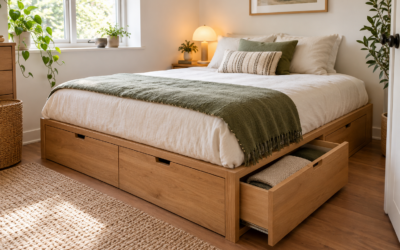
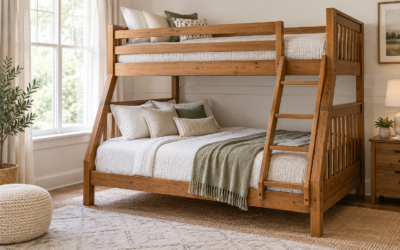
Common styles include a trundle beneath a daybed, a simple under-bed drawer trundle, a pop-up trundle that raises toward the upper mattress, and a trundle beneath a bunk bed. Sleep Foundation notes that the term refers to the lower section and that twin and twin XL are common options, although formats vary.
Pick the type by use, not decoration
| Type | Best question to ask |
|---|---|
| Daybed with trundle | Does the upper bed also need to function as daytime seating? |
| Drawer-style trundle | Can the lower sleeper use a low, fixed-height bed? |
| Pop-up trundle | Do you need two surfaces at a similar height, and is the mechanism approved to lock there? |
| Bunk with trundle | Does the room and household safely support three sleeping positions? |
Use the twin trundle bed guide for the two-bed floor test and the daybed guide if the upper frame must work as seating. For a guest room used by adults, compare trundle beds for adults rather than assuming a child-focused model will suit every user.
The trundle decision checklist
- Measure the upper frame and the full open lower frame.
- Confirm the lower mattress thickness and dimensions from the specific manual.
- Test door swings, closet access and the exit route with the trundle open.
- Check the floor surface and rugs against the mechanism requirements.
- Decide whether the lower sleeper can comfortably use a low bed.
- Identify who will pull out, make and put away the lower bed.
The last step is not minor. A trundle that needs heavy furniture moved or complicated bedding removed may remain closed when guests arrive. The useful design is the one the household can operate calmly and consistently.
What not to assume
Do not assume the lower mattress can be the same thickness as the top mattress. Do not assume casters will cross a thick rug. Do not assume “trundle included” means it will work with any flooring, bedding or sleeper. And do not assume a frame that fits below another bed is safe to use without the maker’s intended supports and locking steps.
Decide who the lower bed is really for
The person who uses the lower bed changes the right answer. A child having a sleepover may be happy with a simple low trundle. An adult guest may need more attention to mattress comfort, getting up from the lower height, and the route around the two beds. A person who needs mobility aids, a clear bedside path or frequent nighttime access may not find a low pull-out bed practical. Do not describe a trundle as universally suitable merely because it creates another sleep surface.
Write down the most likely guest rather than the most convenient hypothetical one. If the room is mainly for grandchildren, a child-oriented daybed/trundle layout can be sensible. If it is a home office that occasionally hosts an adult family member, a full-size daybed or wall bed may be a better trade-off. If guests are unpredictable, choose a design that is easy for a range of people to understand and use safely.
Compare a trundle with its closest alternatives
A trundle bed competes with several different furniture strategies. Two fixed twin beds give each sleeper a normal bed and immediate access, but they permanently occupy more floor. A daybed with trundle adds daytime seating style, though the upper bed’s rails and cushions must suit the room. A sleeper sofa may fit a living room’s daytime role better but adds its own opening and mattress considerations. A Murphy bed can recover floor space, but requires a wall-based installation system and a different nightly routine.
There is no universal “best” because each option saves a different kind of space. A trundle saves floor when the second bed is not in use. A Murphy bed saves open floor from the main bed. A sofa bed prioritizes sitting. Compare the open condition, not just the closed photograph: how many beds are present, who can walk past them, and what must move.
Measure before choosing a style
Use three measurements: the upper frame’s outside footprint; the lower trundle’s complete open position; and the usable circulation path with doors open. Add anything that remains in the room, such as a desk chair, dresser, bedside table, or storage bench. An illustrated floor plan can be helpful, but a tape mock-up is better because it reveals where feet, doors and furniture actually collide.
Then measure vertical clearance under the upper frame from the manufacturer’s specifications. The lower mattress must comply with the particular frame’s stated limit. The general discussion of trundle beds can provide context, but the manual for the exact model wins whenever the two differ.
Care and setup routine
Keep the track or wheel path free of dust, cords and loose objects. Follow the maker’s instructions on cleaning, inspections, moving the frame and locking any pop-up mechanism. If wheels bind, the frame twists, a support is damaged, or the bed no longer returns to its stored position normally, stop forcing it. Check the manual and seek appropriate service rather than using extra force.
Make an intentional guest kit: fitted sheet, blanket, pillowcase, pillow, and a small reading light plan. Store it outside the rolling path. This reduces the temptation to leave loose bedding under the bed, which can prevent smooth operation and create a last-minute scramble at bedtime.
Trundle selection mistakes that cause regret
Choosing by the number of sleepers only. The room must operate with both beds open.
Equating a pop-up trundle with a king bed. Only an exact approved configuration can state what surfaces align and how they are used.
Ignoring the lower sleeper’s needs. Height, access and comfort matter as much as the upper frame’s style.
Buying before checking bedding storage. A trundle is easier to use when linens have a designated home.
Forcing a mechanism across an unsuitable path. Clear the route and follow the product guidance; do not pull harder to overcome binding.
A simple room decision tool
Answer these questions in writing: Is the second bed used less often than the room’s everyday function? Can both sleepers reach the exit without climbing over a frame? Is the lower mattress approved by the manufacturer? Is there a clear path to roll the trundle without removing a heavy rug or table? Can the intended lower sleeper comfortably use the low position? If every answer is yes, a trundle deserves shortlisting. If one or more answers are no, compare a different sleep solution before buying.
Do this check with the people who actually use the room, not only the person making the purchase. A practical disagreement about where furniture moves is valuable before delivery. It can prevent a trundle from becoming a rarely used extra bed that takes up storage and attention without solving guest accommodation.
It also clarifies whether the household values extra guest capacity more than uninterrupted daytime floor. That trade-off, stated plainly, is the trundle decision.
Record the answer with the floor plan, mattress limit and roll-out path. A future move, room rearrangement or new guest pattern can then be evaluated against the same practical criteria rather than an old purchase photo or a vague recollection of what once fit.
Frequently asked questions
Is a trundle bed the same as a daybed?
No. A daybed is an upper frame designed to resemble seating; a trundle is the lower pull-out bed. A daybed may include a trundle, but either term can exist without the other.
Is a pop-up trundle better?
It is better only when the raised configuration suits the room and user. Confirm the exact locking and operation instructions before deciding.
Do trundle beds save space?
They save daytime floor space because the second bed stores below the main frame. When open, the room still needs enough usable space for two sleeping surfaces and a safe route around them.
Bottom line
Select a trundle bed only after its lower bed, mattress limits and open path are measured in the finished room. The right trundle is defined by how it functions on guest night, not how tidy it looks while closed.
Products worth checking
We have not tested these products. Sizes and features come from the Amazon listings, checked on September 30, 2026; where a listing does not say, we say so.
Amazon Basics Twin Daybed and Trundle Bed Frame Set, Steel Slat Support
The listing describes a steel twin daybed with a rolling twin trundle, steel slats on both beds, two locking and two non-locking casters on the trundle, and tools included for assembly. It says the set takes two twin mattresses and gives a weight capacity of 250 pounds.
- Good for: a guest room where you want a plain steel frame and a trundle on casters.
- Keep in mind: the listing does not say the 250 lb limit is per bed, and you should check the trundle’s maximum mattress thickness before buying a mattress.
IDEALHOUSE Twin Daybed with Pop-Up Trundle, Charging Station and LED Light
The listing describes a metal twin daybed with a pop-up trundle, a storage headboard with a charging station and an RGB LED strip. It gives 77 inches long, 45.9 wide and 35.4 high, and 76.8 lb.
- Good for: a room where the second bed should rise to daybed height, with a headboard that holds a charger.
- Keep in mind: at 45.9 inches wide it is about 5.6 inches wider than the Amazon Basics frame (40.3 inches), and we did not find a weight limit in the text we read.
Amazon Basics Full Size Daybed and Twin Size Trundle Bed Frame Set, Steel Slat Support
The listing describes a steel full-size daybed with a rolling twin trundle underneath, steel slats on both beds and tools included for assembly. The measurements table gives 77.3 by 55.3 by 35.4 inches and 71.9 lb.
- Good for: a guest room where the daybed is full size and the second sleeper takes a twin trundle.
- Keep in mind: the trundle is a twin while the daybed is full, so the two beds differ in width; check the maximum mattress thickness before buying mattresses.
Sources checked
Specifications checked on September 30, 2026. Product details and availability can change, so confirm on the product page before you buy.