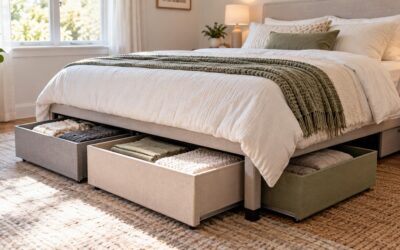
Bed Frame Without a Headboard: Set-Up and Safety
Quick answer: a bed frame without a headboard works well when the frame gives the mattress firm, even support, the bed suits the wall and the pillows, and the sleeping area is safe. Check three things first. Confirm the mattress maker’s support requirements for the frame, because some ask for slat spacing or a centre support that a frame does not always meet. Plan the wall side so pillows and bedding do not rub the paint or the plaster. Keep the bedside surface within a few inches of the mattress top, so you can reach a lamp or a glass without leaning. A headboard is optional. It mainly protects the wall and adds a visual anchor.
This guide covers set-up and safety. The checks apply to any frame and any mattress, and the two nightstands at the end are optional extras.
Check the mattress and frame together
A bed frame and a mattress are a pair. The mattress maker may set rules for the base, and a frame that does not meet them can void the warranty or cause sagging. Before you buy or move a frame, check the mattress warranty or care guide for the base it requires.
- Slat spacing. Slatted bases need gaps narrow enough that the mattress does not sag between them. Many mattress makers state a maximum gap. Check it in writing, because the figure varies by brand.
- Centre support. Wide frames often need a centre rail or legs to stop the middle sagging. Check whether the frame includes one, and whether it has to be used for your size.
- Frame type. A platform base gives a flat surface. A bed with legs leaves a gap under the mattress edge, which can change how the mattress feels at the sides.
- Mattress thickness. The total height of the mattress and the frame changes how easy it is to get in and out. Measure the mattress and the frame height together.
Measure the room before you place the bed
- Bed size and frame footprint. Measure the outside of the frame, not just the mattress.
- Clearance on each side. Keep enough room on the side you get out of most often, and less on the other side only if the room is tight.
- Clearance at the foot. Keep a clear path to the door and the wardrobe.
- Wall to bed. Note whether the bed sits against a wall, and whether there are outlets, switches or radiators behind it.
- Window and door swing. Check that the bed does not block a window or the door’s swing.
Protect the wall without a headboard
Without a headboard, the pillows and the back of the bed touch the wall. Painted walls and plaster can mark, especially with a dark bedspread or a bed set against damp walls. Three options work well.
- Leave a small gap. Place the bed a few inches from the wall. It is simple, but you may still need a bed rail or a cushion to keep the pillows from sliding behind it.
- Use a wall protector. A washable panel or a removable fabric cover protects the paint and can change the look of the room.
- Use a tall wall feature. A tall shelf, a wall hanging or a painted panel can work as a visual headboard. Check that anything fixed to the wall suits the wall type and the weight.
Bedside height and light
A bedside table without a headboard works best when its top sits close to the mattress top. Keeping it close lets you reach a glass or a phone without leaning. Place the lamp on the table or on the wall, and make sure the switch can be reached from the bed.
If the bed sits between two tables, measure both sides. A table that is much higher or lower than the other looks untidy and makes one side harder to use.
Safety checks
- Stability. Check that the frame does not rock or creak when you sit on the edge. Tighten the bolts and check the feet after the first week.
- Gaps. Check the gap between the mattress and the wall or the frame. A large gap can trap a child or a pet, so fill it or move the bed.
- Under-bed space. Keep storage under the bed clear of heaters and cables.
- Children. If children sleep in the bed, follow the manufacturer’s guidance on rails and guards, and check the gap to the wall.
Common mistakes
- Ignoring the mattress warranty. A frame that does not meet the mattress maker’s base rules can cause sagging.
- Measuring only the mattress. The frame is larger, and the clearance must allow for it.
- Letting pillows rub the wall. Paint and plaster mark over time.
- Setting bedside tables at the wrong height. A table far below the mattress top is hard to reach from bed.
- Blocking a door or window. A bed placed without checking the swing can make the room hard to use.
- Skipping the centre support. A wide mattress on an unsupported frame can sag in the middle.
Checklist
- Mattress warranty or care guide checked for base requirements
- Slat gap checked against the mattress maker’s figure
- Centre support present where the size needs it
- Clearance on each side checked (measure yours)
- Wall side protected from pillows and bedding
- Bedside surface planned near the mattress top (measure yours)
- Gaps around the frame filled or checked for safety
Frequently asked questions
Do I need a headboard to use a bed frame?
No. A headboard is optional. It protects the wall and adds a visual anchor, but the frame and mattress work without one if they are a compatible pair.
What slat gap should a frame without a headboard have?
Check the mattress maker’s stated maximum. The figure varies by brand, so do not rely on a general number. A gap that is too wide can cause sagging.
How far should a bed sit from the wall?
You can place the bed against the wall, but leave room for a wall protector or a cushion if the pillows touch the paint. A few inches of gap can make cleaning easier.
Can a headboard-free bed work with bedside tables?
Yes. Keep the table top close to the mattress top, and check that the lamp and switch are reachable from bed.
Products to check, if they fit your space
These Amazon listings are optional, and the guide above works without buying anything. Check the listed size against your space first.
Lazzanto Nightstand with Rear Charging Station, LED Light, 2 Drawers, Black
- Listed size: 11.4 x 15.6 x 24.4 inches
View on Amazon (Affiliate link)
SONGMICS Nightstand with 2 Fabric Drawers, Bedside Table, Side End Table
- Listed size: 11.8″D x 15.6″W x 20.6″H
View on Amazon (Affiliate link)
Related guides
Disclosure: some links on this page are affiliate links. We may earn a commission if you buy through them, at no extra cost to you. We do not show prices or star ratings here, so check the current figures on Amazon. The measurements in this guide are general guidance to check against your room, not product specifications.