As an Amazon Associate we earn from qualifying purchases. Details
# Huuger 31.5-Inch Folding Desk Review
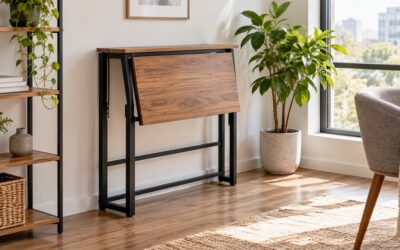
A desk that folds flat is useful only if the room can absorb both its open footprint and its folded storage. The Huuger 31.5-inch folding computer desk is listed as a freestanding, foldable desk for apartments, dorms, bedrooms, and other tight spaces. It is built for a user who needs a work surface part of the time and needs the space back the rest of the time.
This review is based on the supplied product specifications and listing wording. The available specifications does not include independent stability, hinge-life, or desktop-load tests, so those points are unverified. Where the listing is silent, this review says so rather than filling the gap.
Quick verdict
The Huuger desk is built around one measurable figure: a folded thickness of 2.76 inches. Everything else, from stability to the room needed for a chair, is either a listing claim or missing from the available specifications.
It can suit a narrow study corner, a bedroom desk, or a dorm setup where the desk needs to be put away. It is less suitable if you need a permanent desk, a height-adjustable workstation, or a verified load rating for heavy equipment. If you have space for the full folded footprint, a chair that fits under the 18.9-inch deep desktop, and no need for heavy equipment or height adjustment, the desk is worth a closer look. If any of those conditions do not hold, you may not need this desk.
Dimensions: what the listing supports
The listing gives these figures:
| Dimension | Figure |
|---|---|
| Width | 31.5 inches |
| Depth | 18.9 inches |
| Height | 29.7 inches (listed as the maximum height) |
| Folded thickness | 2.76 inches (listed as the minimum height) |
The 2.76-inch figure is the folded thickness the listing supports. The folded width and height are not given. That is the most important gap in the listing, because those two dimensions decide how much storage space you need. Do not plan a storage gap from the 31.5-inch open width. The folded footprint is what has to fit, and the listing does not state it.
The open width is also not the same as usable working width. Once a chair is placed in front of the desk, the space you can use depends on the chair and the room, which The available specifications does not describe. The depth of 18.9 inches is the surface depth. The available specifications does not give knee clearance, leg space, or armrest height for any chair, so the chair question has to be answered by measuring your own chair against the desk.
Folding and storage
The listing says the desk folds down to 2.76 inches thick, so it can slide behind a door, and it describes the desk as quick to fold up and out. The listing does not describe the folding mechanism, the hinge or lock design, or how much force unfolding takes. Those points are missing from the available specifications.
The “slide behind a door” statement cannot be fully checked. The folded thickness is given, but the folded width and height are not. Confirm that the door gap or wall space can take the full folded footprint, not just the thickness. A thin desk that is too wide or too tall for the space behind a door will not fit, however thin it is.
A practical check before you buy:
- Measure the space where the folded desk will be stored, including the width and the height.
- Compare those measurements with the folded thickness of 2.76 inches and with the folded width and height you obtain from the seller or the manual.
- Check the path the desk takes when it is folded and moved into the storage spot.
If you cannot get the folded width and height, treat the storage question as open. Do not assume the desk will fit a space because the thickness is small.
Structure and stability
The bullets describe 18 mm thick steel legs and an X-frame support that they say keeps the desk steady and reduces wobble. The specification field, however, lists the leg style as “Straight,” and the frame joint type as “Frame & Panel Joint.” The X-frame in the bullet and the straight legs in the specification are not the same description. Check the parts on arrival, and confirm the design with the seller or the manual if the frame type matters to you.
Stability is a claim in the listing. The available specifications does not include a stability test, so the caveat applies in full. Test the desk on your own floor after assembly. Note how it moves when you type, and whether it wobbles on an uneven surface.
Before you place a monitor, a heavy printer, or other equipment on the desk, check the manual or ask the seller for the load figure. The available specifications does not give a desktop-load rating. Desktop-load and hinge-life are both unverified in the available specifications.
The listing also describes the desk as light enough to move between rooms and to take on a road trip. The weight is not given, so the claim that the desk is lightweight cannot be measured. If you plan to move it often, weigh it before you decide, or ask the seller for the figure.
Working space and chair clearance
The desktop is 18.9 inches deep, and the desk is listed at 29.7 inches high. The available specifications does not give knee clearance, leg space, or the height of the armrests on any chair. That is a significant gap for a computer desk, because a chair that does not fit under the desktop makes the desk hard to use for long periods.
To judge whether a chair fits, measure your chair’s seat height, its armrest height, and the space under the desktop. Then compare those with the 29.7-inch height and the 18.9-inch depth. Check that the armrests clear the underside of the desktop, and that your knees can sit under the surface without hitting the frame. The available specifications does not answer these questions, so the measurement is your job.
The listing says the desk can serve as a dining table in front of a sofa. Whether that works depends on your seating height, which The available specifications does not address. Measure the seating you would use with the desk, and compare it with the 29.7-inch height, before you rely on that use.
The listing suggests balcony, patio, and garden use. Before using the desk outdoors, check the manufacturer’s guidance. The available specifications does not describe the outdoor suitability of the desktop material, which is engineered wood.
Materials
The desktop is listed as engineered wood in a rustic brown finish. The listing’s material type for the desk is engineered wood and metal. The available specifications does not describe the top’s coating, its moisture resistance, or how it handles spills or heat. Those points matter if the desk moves between rooms or goes outdoors.
Assembly
The listing says the desk comes with a clear manual and the tools needed, which are a screwdriver. It says one person can assemble it in under 20 minutes. Check the parts against the packing list when the desk arrives. The available specifications does not describe a retightening schedule, so tighten the fasteners after assembly and check them again after the first few weeks of use. A desk that wobbles after assembly often has loose fasteners.
Assembly is a short task according to the listing, so the main risk is missing or mismatched parts rather than a long build. Confirm that the leg style and the frame joint match what you expect from the bullets and the specification.
Who this desk suits
This desk is a reasonable fit for:
- A dorm or apartment resident who needs a work surface that stores flat.
- A bedroom user with a narrow corner and a need to put the desk away when it is not in use.
- A traveler or a person who moves the desk between rooms.
- A buyer who can confirm the folded footprint and the chair clearance before ordering.
The desk’s strongest case is its folded thickness in a room where the storage gap is known. It is a simple product for a simple need, and its limits come from the gaps in the listing rather than from any single flaw.
Who should skip it
This desk is probably not the right choice for:
- Anyone who needs a fixed or height-adjustable workstation.
- Anyone whose folded storage space is smaller than the folded footprint, which the listing does not give.
- Anyone who needs a documented load rating for heavy monitors or equipment.
- Anyone who needs a verified stability or hinge-life figure before buying.
- Anyone whose chair does not fit under an 18.9-inch deep desktop at a comfortable height.
Buyer checklist
Before you buy, work through these items:
- Measure the folded footprint of the storage space, including width and height, and compare it with the 2.76-inch folded thickness.
- Get the folded width and height from the seller or the manual.
- Measure your chair’s seat height, armrest height, and clearance under the desktop.
- Check the leg and frame design when the desk arrives, since the bullet and the specification differ.
- Ask for the weight, if you plan to move the desk often.
- Ask for the desktop-load figure, if you plan to use heavy equipment.
- Assemble with a screwdriver, check the fasteners, and test stability on your own floor.
- Check the weather guidance before any outdoor use.
Limitations and caveats
The available specifications leaves several important points open:
- Stability, hinge life, and desktop load were not independently tested.
- The bullet describes an X-frame, while the specification lists straight legs.
- No weight figure is published, so the lightweight claim is unverified.
- The folding mechanism and the outdoor suitability of the top are not described.
- Folded width and height are missing from the listing, so storage fit cannot be confirmed.
- Knee clearance, leg space, and armrest height for any chair are not given.
These gaps are the reason the desk’s verdict depends on measurement. A buyer who fills the gaps with their own measurements and the seller’s answers will know far more about the desk than the listing alone tells them.
A realistic room-fit test
Tape a 31.5-by-18.9-inch rectangle on the floor or place cardboard at desktop height before ordering. Add the chair in its working position, then walk the route you use through the room. This catches a common planning error: the desk may fit against the wall while the occupied workstation blocks a door, drawer, or walkway. Repeat the test for the proposed folded-storage location, using the confirmed folded width and height rather than assuming that the open dimensions carry over.
For laptop work, the 18.9-inch depth may be enough for a compact setup, but monitor stands, full-size keyboards, notebooks, and a lamp compete for the same surface. Lay out the equipment you expect to use and leave room for cables. If a clamp-on monitor arm or accessory is part of the plan, verify edge clearance, top thickness, and the maker’s load guidance first; those details are not established here.
Finally, decide how often the desk will really be folded. Occasional storage and daily folding impose different demands on access, cable management, and the hinge area. A desk that technically folds can still be inconvenient if every session requires unplugging equipment and moving a chair. That workflow test is more informative than the word “foldable” alone.
Pros and limits in context
The compact open footprint and thin folded profile are the useful parts of the proposition. The tradeoff is that a shallow, narrow surface leaves little tolerance for large peripherals, while missing folded dimensions and load data require follow-up before purchase. For a laptop-and-notebook routine, that compromise may be sensible. For dual monitors, forceful writing, or permanent equipment, a fixed desk with documented capacity is easier to evaluate.
Additional decision notes
Also check the floor. Uneven hard flooring and deep carpet can change how a light folding frame feels. Level the setup only by methods allowed by the manufacturer, and do not assume that leaning the folded desk unsecured against a wall is safe around children or pets.
Worked example: wall width and folded storage
Worked example: the open desk is 31.5 inches wide and 18.9 inches deep, and it folds to 2.76 inches thick. Suppose the wall space you have is 48 inches across. The 31.5-inch desk leaves 16.5 inches of that wall (48 minus 31.5). That remainder helps only if the folded width and height also fit, so 16.5 inches does not by itself prove that the desk will store in the space.
Conclusion
The Huuger 31.5-inch folding desk is a freestanding, foldable computer desk with one measurable advantage: a folded thickness of 2.76 inches. It suits a narrow space that needs a work surface part of the time, and it is listed as quick to fold, light enough to move, and simple to assemble in under 20 minutes.
The desk is worth a closer look only if the folded footprint fits the storage space, a chair fits under an 18.9-inch deep desktop at a comfortable height, and the desk does not need to carry heavy equipment or adjust in height. Confirm those points, along with the leg and frame design on arrival, before you rely on the desk.
Check the current Huuger desk listing on Amazon for the manufacturer’s details: Huuger Folding Desk for Small Spaces, 31.5 Inch Foldable Computer Table.
Frequently asked questions
How big is the desktop?
The desktop is 31.5 inches wide and 18.9 inches deep, and the listing gives a maximum height of 29.7 inches.
How thin does the desk fold?
The listing gives a folded thickness of 2.76 inches. It does not give the folded width or height, so measure your storage space in all three dimensions.
How long does assembly take?
The listing says the desk comes with a clear manual and a screwdriver, and that one person can assemble it in under 20 minutes.
Can I put a heavy monitor on it?
The listing does not give a desktop-load rating. Check the manual or ask the seller for the load figure before you place heavy equipment on the desk.
Is the desk light enough to move often?
The weight is not published, so the lightweight claim cannot be checked. Ask the seller for the weight if you plan to move the desk often.
Sources
- – https://www.amazon.com/dp/B0F43TL3GT/?tag=tinyspacepick-20