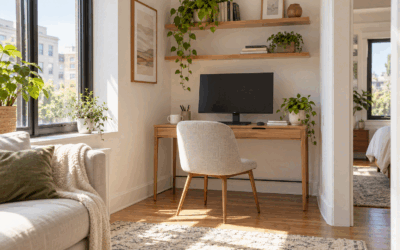
Desk Partition Ideas for a Small Home Office
Quick answer: add a desk partition only when you need to block one specific thing: a view of people walking past, a busy wall behind the screen, or noise from the room. Height decides most of the result. A panel set at a moderate height above the desk surface blocks side views from a seated position and keeps most of your light. A taller panel gives more privacy but can make a small room feel closed in. Check the panel height against your seated eye height and your chair before you choose a design.
This guide covers layout, measurements and the steps to follow. It does not rank products or recommend a model, because the right partition depends on your room more than on any single model.
Decide what the partition must do
Most small offices need one of three things. Pick the main job first, because it sets the height, the position and the material.
- Privacy from view. You do not want people in a hallway, a kitchen or a doorway to see your screen or your movement. This usually needs the panel on the open side of the desk, at seated height.
- Less visual clutter. The wall behind the desk holds shelves, laundry or a bed. A low back panel or a shelf can hide that without closing the space.
- Some sound control. A partition can soften echo and block a little direct sound. It does not work as a sound wall, so treat it as one part of a quiet set-up, not the whole fix.
Measure before you plan
Gather these numbers with a tape measure. Write them down before you look at any design.
- Desk depth, width and surface height. Measure your desk surface height instead of assuming a standard.
- Seated eye height above the desk. Sit in your normal chair, look straight ahead, and have someone measure from the desk surface to your eyes. This is the reference for panel height.
- Distance from desk edge to wall or cabinet. Work out the walkway behind your chair. Leave enough clear space to pull out the chair and walk past comfortably. Narrower spaces can work for short periods, but check how it feels after a week.
- Window and light direction. Note where daylight falls on the desk at different times of day.
- Power points and cable runs. A panel that hides cords can also trap them, so plan the route first.
Height by goal
The table below gives rough guidance only. It is not a standard, and your seated eye height, chair and monitor position change the result.
| Goal | Suggested height above desk surface | Trade-off |
|---|---|---|
| Stop side views while seated | Measure yours | Keeps light and airflow; privacy is limited when you stand |
| Block a doorway or hallway | Measure yours | More privacy; can feel enclosing in a small room |
| Soften echo on one side | Covers the noisy side of the desk | Use a soft surface; a thin hard panel reflects sound |
Layout ideas that suit small rooms
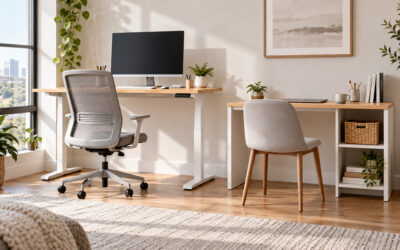
Side panel on the open side. A single panel on the side that faces the room, with the monitor side left open. This is the simplest option in a corner and uses little floor space.
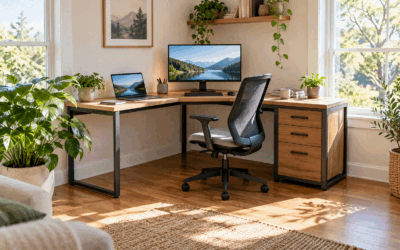
Low panel behind the screen. A short back panel placed behind the monitor hides the wall without blocking the room. Keep it far enough back that the chair can roll and your head can move freely.
End of a shallow shelf. A tall, shallow bookshelf placed at right angles to the desk can act as the side wall. Keep the top shelf at or below your eye line if you want to keep the light open, and put lighter items at the top.
Freestanding folding screen. Lightweight and easy to move. Check the footprint of its base, because some screens need more floor space than their width suggests.
Desk-mounted or clamp-on panel. Useful when the floor is full. Check that the clamp suits your desk edge thickness and that the panel does not flex when you bump the desk.
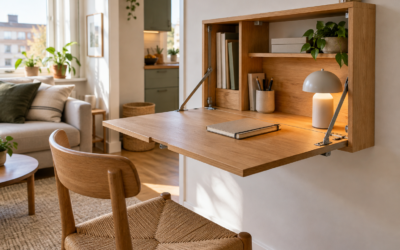
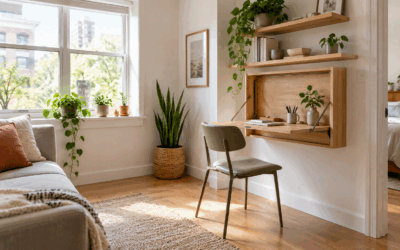
Wall-mounted panel behind the desk. Uses no floor space, but needs a solid wall and an anchor point that suits the panel’s weight. Plan this before you move the desk.
Light, glare and airflow
A partition placed directly behind the monitor can reflect light into the screen. Glossy finishes facing the screen are the usual cause. Choose a matt surface on the side that faces you, and test the glare at the times of day you work. If the panel sits between the window and your desk, it may block the daylight you need, so check the light again after you place it.
Keep partitions away from radiators, heaters and air vents. A large panel can change the air flow across the desk and make a small room feel stuffy, so leave a gap at the floor if you can.
Sound: what a partition can and cannot do
A partition helps most with echo and close-range noise around the desk. It will not stop speech through a wall or a door. For calls, a soft-surfaced panel combined with a rug, curtains or a fabric chair does more than a thin hard screen. If noise from another room is the main problem, start with the door and the wall, then add the partition.
Common mistakes
- Too close to the chair. The panel stops the chair from rolling, and you bump it every time you stand.
- The tallest panel by default. A full-height panel can cut light and make the room feel smaller. Start from your seated eye height.
- Blocking the view you need. If you cannot see the door or the room’s exit from your seat, the set-up can feel uneasy even when it looks private.
- Ignoring cables. Plan where cords run before you fix the panel, and keep power points reachable.
- A shiny finish facing the screen. It reflects light and causes glare on the monitor.
- A clamp that does not suit the desk. Check the desk thickness and the clamp range before you buy.
Checklist before you choose a partition
- Main job written down: privacy, clutter or sound
- Seated eye height measured from the desk surface
- Walkway behind the chair checked (measure yours)
- Glare checked at the times of day you work
- Cable route and power points planned
- Stability checked: the base, the clamp or the wall anchor suits the panel’s weight
- Room traffic checked: nothing blocked for doors, heaters or vents
Frequently asked questions
How tall should a desk partition be?
For side privacy while seated, check the panel height against your seated eye level. Taller panels give more privacy but reduce light and can make a small room feel closed in. Measure your seated eye height first.
Will a desk partition block noise?
Only partly. It can reduce echo and some direct sound near your desk. It is not a soundproof wall, so plan calls and quiet work around the room’s main noise sources.
Can I put a partition behind my monitor?
You can, if the panel is far enough back for the chair to roll and it does not reflect light into the screen. Test the glare at the times of day you work.
Do I need a partition if I already have a wall?
Not always. A wall gives privacy without using floor space. A partition helps most when the desk sits in the middle of a room or an open-plan area.
Products to check, if they fit your space
The listing below is a small computer desk, not a desk partition. It is shown only as an example of a desk size to plan a partition around, and the guide above works without buying anything. Check the listed size against your space first.
DUMOS 32 Inch Small Computer Desk, Home Office Desks for Bedroom, All White
- Listed size: 32 x 19.7 x 29.8 inches
View on Amazon (Affiliate link)
Related guides
Disclosure: some links on this page are affiliate links. We may earn a commission if you buy through them, at no extra cost to you. We do not show prices or star ratings here, so check the current figures on Amazon. The measurements in this guide are general guidance to check against your room, not product specifications.