As an Amazon Associate I earn from qualifying purchases. Links marked “Affiliate link” may earn us a commission at no extra cost to you. Learn more.
For a small room, a task chair is usually the better fit: it is lighter, narrower and easier to move. An executive chair makes sense if you sit for long sessions, want a headrest and recline, and have space for a bigger footprint. The category names are marketing terms, not standards, so judge each chair by its measurements and features.
This guide compares the two on what matters in a small space: size, support, mobility, materials and how easy each is to live with. It is general information from product categories and OSHA guidance, and we have not tested chairs in person.
What the two names usually mean
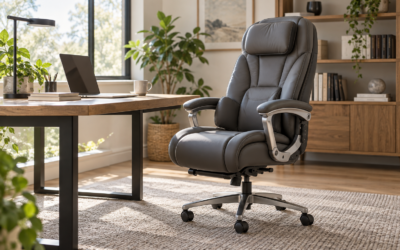
A task chair is a general work chair, typically with a low or mid-height back, a mesh or fabric cover and a set of adjustments. An executive chair usually has a tall back, thick padding, a headrest and a leather or PU-leather look, and it is often built for a larger frame. Some products sit between the two, and listings often use the words loosely, so check the dimensions and the adjustment list.
Task chair vs executive chair side by side
| Task chair | Executive chair | |
|---|---|---|
| Typical back | Low to mid | High, often with a headrest |
| Typical cover | Mesh or fabric | Padded leather or PU leather |
| Footprint | Usually smaller | Usually larger and heavier |
| Moving and storing | Easier to roll and tuck in | Harder to move, more likely to block a walkway |
| Upper-back and neck support | Limited unless it has a headrest | Often better |
| Warm-room comfort | Mesh is breathable | Leather-look covers can feel warm |
| Cleaning | Fabric holds dust, mesh needs vacuuming | Wipes clean, but the surface can wear |
| Best when | The room is small or the chair is moved often | One person sits for long sessions and the space allows it |
Space and floor
Three measurements decide the fit: the width and depth of the chair, and the room behind the desk. A wide seat with big arms and a deep back can trap you between a desk and a bed or wardrobe. Measure the free space behind the desk before you look at styles, and compare it with the chair depth in the listing. Our chair fit guide shows how to check the chair against the desk opening, and the desk size guide covers the desk side.
A heavy chair with a fixed high back also dominates the room visually. In a bedroom or living room a low-back chair can disappear when it is pushed in, while a tall executive chair stays a piece of furniture in the middle of the room.
Support: what the tall back really adds
OSHA describes a good chair as one with lumbar support that adjusts in height, a backrest that lets you recline at least 15 degrees from vertical, and a strong five-legged base with casters suited to your floor (OSHA chair guidance). Those are features of the chair, not of its category, so a task chair with adjustable lumbar can beat an executive chair with a fixed pad. What a tall back does add is upper-back and head support when you lean back to read or think.
Three example rooms
- Studio apartment, desk beside the bed: a mid-back task chair, armless or with flip-up arms. The chair is pushed under the desk every night, and the room cannot spare a large footprint.
- Spare bedroom used as an office for 6 to 8 hours: either type works. If there is 30 or more inches between the desk edge and the wall, a task chair with a headrest or a compact executive chair is realistic. If not, stay with a task chair.
- Living-room corner used a few hours a day: a task chair in a neutral color, so the workspace blends in when you are not using it. A tall executive chair would dominate the room.
How to choose
- Small room, frequent moving, lighter budget in space: task chair, ideally with adjustable seat height and lumbar.
- Long sessions, want to lean back, room to spare: executive chair, after checking the depth and the weight limit.
- Warm room or no air conditioning: lean toward mesh, whichever category it comes in.
- Pets or spills: a wipeable cover is easier to clean than mesh or fabric, but scratches show on leather-look surfaces.
- Very short or very tall: ignore the category and check the seat height and depth range. Our guide to numb feet and seat fit explains how to find your right seat height.
For compact picks, start with our guide to the best office chairs for small spaces.
Products worth checking
These products match the topic above. We have not tested them. Sizes and features come from the Amazon listings, checked on September 30, 2026; where a listing does not say, we say so.
VECELO Mid-Back Swivel Ergonomic Office Chair with Adjustable Arms
A simpler mid-back mesh chair with height-adjustable armrests, a high-resilience sponge seat, a steel structure and a stated capacity of 275 lb. The listing gives a seat height of about 45 cm and a seat depth of 18.9 inches.
- Good for: someone who wants a lighter chair with a shallower seat, and for whom lumbar adjustment is not essential.
- Keep in mind: the listing says mesh lumbar support but does not say it adjusts, so it may not suit you if the lumbar position matters.
Amazon Basics Low Back Office Chair
This mesh-back chair has a padded seat, pneumatic height adjustment, swivel and rolling casters. The listing states it supports up to 275 pounds and complies with BIFMA standards, and it includes a manual for assembly.
- Good for: everyday desk use in a bedroom or living room, and for people who want a simple chair with a stated weight capacity.
- Keep in mind: the listing shows a low back, so check whether the backrest height suits you.
VECELO High Back Ergonomic Big and Tall Mesh Desk Chair
The listing describes a 3D adjustable headrest, armrests with 2.8 inches of vertical lift, a recline that locks at 90, 110 and 120 degrees, a reinforced steel base rated to 500 lb, silent casters and a class-3 gas lift. Overall size is listed as 21.7 by 26 by 49 inches.
- Good for: a taller user who wants a headrest, or a heavier user who wants a 500 lb rating.
- Keep in mind: the text we read does not state the seat height range, seat size or user height range, so confirm them before you buy.
Frequently asked questions
Is a task chair or an executive chair better for back pain?
Neither category is better by itself. Look for adjustable lumbar support, adjustable seat height and depth, and a recline that suits you. If you have ongoing pain, ask a health professional.
Do executive chairs fit in small rooms?
Some do, but they are usually larger and heavier, so measure the depth and the space behind the desk first.
Is mesh better than leather for an office chair?
Mesh is more breathable, and leather-look covers are easier to wipe clean. Which is better depends on the room temperature and how the chair is used.
What does a headrest do?
It supports your head and neck when you lean back. It is useful for reclining but does nothing when you sit upright at a keyboard.
Can a task chair be comfortable for eight hours?
It can if it fits you and is adjusted well, but nothing replaces changing position and standing up regularly.
Last updated: September 29, 2026. General information, not medical advice.
Related guides
- Best Computer Desks for Small Spaces
- Best Office Chairs for Small Spaces
- Best Office Chairs for Lower Back Pain: Lumbar Support Compared
- How to Sit at a Desk All Day: A Simple Chair and Desk Setup Checklist
- Best Office Chairs for Tall People: Seat Height and Depth Compared
- How to Turn a Closet into a Desk Nook: Measurements and Steps
- Best Standing Desk Converters for Small Desks: 3 Options Compared