Quick answer
There is no single folding table size that works as the universal “standard” for every room, event or task. Sellers use familiar size categories, but the right choice depends on the exact table’s published open dimensions, height, leg layout, folded dimensions and intended seating plan. Choose by mapping people, chairs and walkways—not by buying the first table described as standard.
Start with the job. A buffet line, a family meal, a craft session, a home office and occasional extra seating place different demands on a folding table. Use the manufacturer’s specifications for the exact model you are considering, then tape the open tabletop and chair zones on the floor. Also measure where the table will go when folded; storage is part of the size decision.
This guide avoids invented universal measurements. Individual tables can vary even when their labels sound identical, so verify every stated dimension, load instruction and folding mechanism with the current seller or manual. The goal is to help you interpret those numbers before ordering.
Understand the four measurements that matter
When comparing folding tables, record four separate values from the exact product documentation:
- Open tabletop length and width (or diameter). This is the working or dining surface.
- Open height. It affects chair compatibility, task posture and whether the table tucks under another surface.
- Leg and base footprint. Legs can sit inside the tabletop outline or extend in ways that affect knees, chair placement and rugs.
- Folded dimensions. These determine whether the table can pass through a doorway and fit in a closet, under a bed or against a wall.
Do not replace any of these with a marketing label. “Six-foot,” “round,” “banquet” or “card” can be helpful search language, but it does not tell you how the exact legs fold, how much depth remains in storage, or whether an apron reduces knee room. If a product page lists only a broad category, request the manual or a dimension diagram.
Choose the tabletop shape from the activity
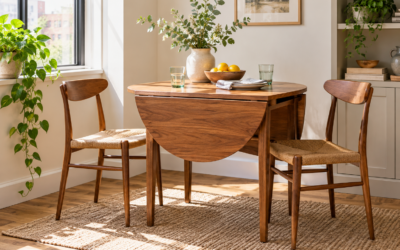
Rectangular tables are often convenient for a wall, buffet line, work surface or rows of seats because their edges align with rooms. Round tables can help conversation and may make circulation feel smoother in a square room. Square tables may suit a small game or craft group. None is automatically more space-efficient; the room and chair movement decide.
For dining, sketch each intended place setting and chair. For a craft project, sketch the tools, bins and task area that need to sit on the surface. For an event, mark where people queue, serve food or carry dishes. A tabletop that looks generous when empty may be inadequate once equipment and elbows are included.
Avoid trying to derive seating capacity from a vague product photo. The manufacturer may state a capacity, but it is not a guarantee that every chair type or body size will feel equally comfortable. Treat it as one input, then test your own chair width and circulation plan.
Map chairs and circulation, not only the tabletop
Put painter’s tape on the floor for the full open tabletop. Add a second tape line or empty chairs for the positions people will occupy. Then walk behind each chair as if someone were seated. Check door swings, cabinet drawers, refrigerator access and the route to a bathroom or exit.
This step matters especially in apartments and multipurpose rooms. A table may fit between two walls yet leave no usable path once chairs pull out. If people will regularly walk behind diners, set a clear route instead of expecting them to squeeze sideways. If the table is for a party, consider both the occupied layout and the route people take while carrying a drink or plate. For a compact option, compare the same planning process in small folding table; smaller dimensions do not remove the need to map chairs and paths.
The same planning principle applies to small living room ideas: room fit is an activity sequence, not a product measurement. A smaller table that preserves the path often outperforms a larger one that must be folded and moved every time someone needs to pass.
Check height against the intended seating
Open height matters because folding tables serve different jobs. A table used with dining chairs, stools, a sofa or a standing task may need a different relationship to its seats. Compare the table’s exact published height with the chairs you already own. Sit at a similarly sized surface if possible, but do not assume two products with the same category name use identical heights.
Look beneath the tabletop as well. Crossbars, locking components and aprons can affect where knees, armrests or chair backs go. If a user relies on a wheelchair or has a mobility need, evaluate the specific leg layout and clearance with that user’s requirements; do not infer accessibility from tabletop width alone.
For a temporary desk, also consider cable routes, monitor placement and task materials. A folding table can be a useful occasional work surface, but a quick setup should not mean an unstable pile of equipment or cords across a walkway. If work is the main purpose, compare its closed storage and daily setup burden with best folding desks for small spaces.
Measure the folded table before you buy it
The storage question is where many “standard folding table size” searches go wrong. A table may fit the dinner setup but not the closet. Record folded height, width and depth, plus whether it needs to stand on an edge, lie flat or use a protective cover. Check the path from the room to storage as well: closet door, hall turn, stair or elevator.
Assign an exact storage home. Measure its interior opening rather than the outside of the cabinet. Confirm that the folded table can be lifted, rolled or carried there by the person who will store it. If the plan requires moving several other items each time, the table is unlikely to remain convenient.
Keep folded furniture secured according to the manual. Do not lean an unstable table where a child, pet or door could knock it over. The CPSC specifically warns that children should not move or play with tall mobile folding tables because tip-over incidents can seriously injure them; that alert concerns large wheeled institutional tables, but its basic lesson applies here: follow the table’s storage instructions and keep children away while any folded table is being moved.
Verify legs, locks and floor contact
Read the instructions for opening, locking and closing the exact table. Identify whether legs swing out, cross, fold inward or use a brace. Check where those points touch the floor and whether a rug, uneven surface or floor vent creates a problem. Never prop a table with random objects or bypass a lock because it feels inconvenient.
Before an event, open the table on the intended floor and check it as instructed. Confirm the locks are engaged, the tabletop is level according to the product’s normal setup, and chairs do not collide with the leg structure. Follow any published care or load guidance. Do not invent a safe capacity from the table’s material or appearance.
If the table will hold food, equipment or a craft machine, plan the load from the manufacturer’s stated rules and distribute items appropriately. When those rules are unavailable, ask the seller; “it looks sturdy” is not a safety standard.
Plan delivery and first use
Compare the packaged dimensions, if supplied, with your entry door, elevator, stairs and hallway turns. The table may be thin when folded but still arrive in a carton that is awkward to maneuver. Confirm whether assembly is required and keep the manual after setup.
On arrival, inspect the tabletop, hinges, legs, braces and locking parts before discarding packaging. Open and close the table in a clear area so you understand the sequence before a meal or event. Keep children and pets away from the moving parts during setup and storage.
Use a two-layout table plan
An original planning tool for any folding table:
| Question | Open-layout answer | Folded-storage answer |
|---|---|---|
| Exact model dimensions | Record published open measurements | Record published folded measurements |
| People and chairs | Mark seats and pull-out zones | Confirm chairs have their normal home |
| Pathways | Walk doors, kitchen and exits | Check route to storage |
| Support | Verify legs and locks on the floor | Confirm safe, stable storage position |
| Accessories | Plan food, work or craft items | Store cover, clips or manual nearby |
Complete both columns before you buy. A table that only works in one column is often a poor folding-table choice.
Common mistakes
Buying by a category label alone. Use the exact model’s dimensions and diagram.
Counting chairs but ignoring pull-out space. Seating and walking need separate room.
Forgetting folded depth. A closet must accommodate the stored object, not just the tabletop.
Ignoring the legs. Their position affects knees, chair placement and stable setup.
Using a temporary table without a storage plan. If storage is difficult, the table becomes permanent clutter.
Frequently asked questions
What is the standard folding table size?
There is no one universal size for all uses. Compare the exact product’s open tabletop, height, leg footprint and folded dimensions with your room and activity.
How do I know how many people fit?
Use the seller’s stated guidance if available, then map your actual chairs, place settings and walking paths. Do not rely only on a promotional photo or a generic capacity label.
Should I measure storage first?
Measure both the open room layout and the folded storage location before buying. A folding table succeeds only when both modes fit.
Bottom line
The right folding table size is the exact size that supports your activity, chairs, walkways and storage routine. Record the model’s four key measurements, tape both layouts, verify legs and locks, and choose a smaller or different shape when the “standard” option blocks how your room actually works.
Sources checked
Specifications checked on September 30, 2026. Product details and availability can change, so confirm on the product page before you buy.