As an Amazon Associate we earn from qualifying purchases. Details
A luxton kneeling chair is a wood-frame kneeling chair with extra seat padding, made to hold your spine in a more open position while you work in a small room. This guide helps you decide whether that style fits your body, your desk height, and your floor space, and how it compares with four other kneeling chairs. You will get size-first checks, weight limits from the listings, adjustment differences, and clear rules for when to choose another design.
Measure your desk area and doorway before you order. Use the dimensions from the product listings below, and leave room to get in and out of the chair.
Quick answer
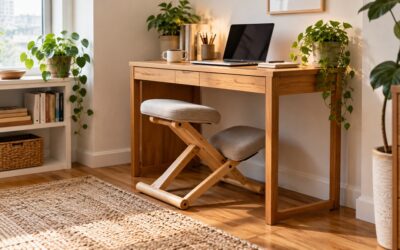
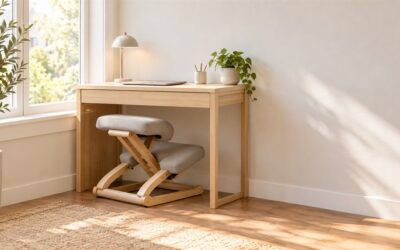
If you want the Luxton style, the top choice is the Luxton Home model with Product Dimensions of 28″D x 16″W x 28″H, Item Weight of 13.8 pounds, and Maximum Weight Recommendation of 265 pounds. The listing states Frame Material Type of Wood, Seat Material of Foam, and an Open Back, so it stays visually light in a studio or dorm. Choose it if you want extra seat padding, a wood frame, and a narrow 16-inch width for a tight desk bay.
Choose the tall adjustable wood model with 24 angle combinations if several people share the chair or your desk height is uncertain. Choose the folding model that lists No assembly required and 15 pounds if you need to fold and store it daily. Choose the model that lists 14″D x 14″W x 28″H if your floor footprint is very small. Choose the wheeled model with 4 height positions if you want height adjustment and casters. For background on posture at a desk, read how kneeling at a desk changes sitting angle and when active sitting makes sense.
What matters for a luxton kneeling chair in a small room
A kneeling chair changes the trunk-to-thigh angle. One listing in this group describes a 120° trunk/thigh angle instead of the 90° angle of a standard chair. Another listing says a 60-70° thigh-to-calf angle helps reduce spinal pressure. These are listing claims, not medical advice. If you have knee, hip, back, or circulation issues, ask a professional before you buy. For related designs, see best kneeling chair with backrest and best adjustable kneeling chair.
Fit comes first. Use these five checks.
1. Floor footprint against your desk bay The Luxton-style pick lists 28 x 16 x 28 inches. That means 28 inches deep and 16 inches wide. The other picks list 31.5 x 21.65 x 19.69 inches, 20 x 13 x 13 inches, 14 x 14 x 28 inches, and 25.59 x 18.5 x 26.38 inches. Measure the open floor in front of your desk, then measure your doorway. A chair that is narrow but deep can still block a walkway. As a yardstick only, an accessible route is 36 in minimum continuous clear width and may narrow to 32 in at points such as doorways for a maximum distance of 24 in. That is a public-building guide, not a home rule, but it helps you keep a path usable.
2. Weight limit and frame material The listings state Maximum Weight Recommendation of 265 pounds, 250 pounds, 250 pounds, 240 pounds, and 661 pounds. Frame Material Type entries include Wood, Alloy Steel, Polyvinyl Chloride, and Stainless Steel. Do not exceed the listing limit. The listing does not state test methods, so treat the number as a cutoff. Check the listing for care and assembly parts.
3. Padding and session length Seat Material entries in this set include Foam, Fine Linen, PU Leather +High Resilience Sponge, and Wood. One listing notes 5cm Foam cushion on the knee pad and seat. Two listings advise starting with short sessions of 20-30 minutes or 30 minutes to 1 hour, then stretching. That matches small-space reality: you need room to stand, stretch, and walk. If you plan long study blocks, padding thickness and knee-pad width matter more than frame color.
4. Adjustment and desk match One pick lists 24 adjustable angle combinations. One lists 4 height positions with a seat lift range of 12”-18”. One lists 6 hole manually adjustable seat height. One lists No assembly required. One listing says it is best suited for desks 29 to 33 inches high. Measure your desk top height from the floor. Then confirm knee clearance. A useful yardstick from workstation guidance is at least 20 in wide, 17 in deep at knee level, 24 in deep at foot level, and 4 in high at the foot, with height adjustable 20 to 27 in near the user. That guidance is for conventional work surfaces, not a guarantee for kneeling chairs.
5. Storage and movement Item Weight in this set lists 13.8 pounds, 20.3 pounds, 15 pounds, 14.4 pounds, and 17.2 pounds. One listing adds that the chair weighs 21.4 lbs in a bullet, which conflicts with the 17.2-pound spec entry, so rely on neither number without checking the listing. Wheels help on hard floors but add roll in tight rooms. A folding frame helps in a dorm where the chair must go in a closet. Check whether casters lock; the listings here do not state locking.
Picks that fit small spaces
The cards below show specs, pros, and cons. The notes here explain who each shape fits. All dimensions and limits come from the listings.
1. Best overall for small apartments: narrow wood frame with extra padding
This is the Luxton Home style pick. The listing states Product Dimensions of 28″D x 16″W x 28″H, Size of 28D x 16W x 22H in, Seat Height of 22 inches, Item Weight of 13.8 pounds, and Maximum Weight Recommendation of 265 pounds. Frame Material Type is Wood, Seat Material is Foam, Fill Material is Foam, and Back Style is Open Back. The title includes Extra Padding and the bullets describe rocking motion for comfort and productivity.
It fits a renter who wants a simple wood kneeling chair without adjustments or wheels. The 16-inch width helps beside a bed, closet door, or radiator. The open back keeps sightlines open. The 13.8-pound weight is easy to pull out for cleaning. The listing contradicts itself on height, showing 28″H in one field and 22H in Size, so measure for desk fit and check the listing before you buy. Who should skip it: anyone who needs height adjustment, wheels, or a stated small-desk match, because the listing does not state those.
2. Best adjustable angle pick for shared use: 24 combinations and solid wood
This pick lists Product Dimensions of 31.5″D x 21.65″W x 19.69″H, Item Weight of 20.3 pounds, Frame Material Type of Wood, Seat Material of Fine Linen, and Maximum Weight Recommendation of 250 pounds. It also lists Number of Height Positions of 24 and 24 adjustable angle combinations in the bullets. The bullets describe a 60-70° thigh-to-calf angle and slow-rebound foam.
It fits households where two people of different heights share one desk. You can change the angle instead of buying two chairs. The 31.5-inch depth needs more floor than the Luxton-style pick, so allow pull-out room. Seat Height is listed as 3.5 inches and Seat Depth as 3.5 inches, which do not read as usable sitting heights, so check the listing diagram before judging desk match. Who should skip it: anyone with only a narrow bay, because 21.65 inches wide plus rocking space is the largest width here.
3. Best folding pick for dorms: no assembly and wheels
This pick lists Item Dimensions of 20 x 13 x 13 inches, Product Dimensions of 20″D x 13″W x 13″H, Item Weight of 15 pounds, and Maximum Weight Recommendation of 250 pounds. Material Type is Alloy Steel, Polyvinyl Chloride, Wood. Assembly Instructions Description is No assembly required. Leg Style is wheels, and bullets describe universal wheels and 6 hole manually adjustable seat height.
It fits a dorm or studio where the chair must fold or roll into a closet daily. The bullets state Size of 13″X 13″ for the seat area and Weight of 14.80lbs for chair only, which differs from the 15-pound spec entry, so confirm packed size with the seller. The 5cm foam note helps if you sit for classes. The listing does not say whether 20 x 13 x 13 inches is the folded or open size. Who should skip it: anyone who wants a wide knee pad or a stated seat-height range in inches, because the listing does not state usable seat height in the specs.
4. Smallest footprint pick: narrow tower for tight corners
This pick lists Product Dimensions of 14″D x 14″W x 28″H, Item Weight of 14.4 pounds, Seat Height of 11 inches, Seat Depth of 14 inches, and Maximum Weight Recommendation of 240 pounds. Frame Material Type is Wood, Seat Material is Wood, Fill Material is Foam, and Assembly Instructions Description is No assembly required. The bullets say it suits desks 29 to 33 inches high and provides a 120° trunk/thigh angle.
It fits a corner desk, vanity nook, or micro-bedroom where a 14-by-14-inch footprint is the only option. At 14.4 pounds it is light to carry, second only to the 13.8-pound Luxton-style chair. The wood seat with foam fill will feel firmer than a thick foam seat, so plan short sessions first. The listing notes leg discomfort at first and suggests 30 minutes or 1 hour with stretching. Who should skip it: anyone over 240 pounds or anyone who wants a wide padded seat, because the limit is the lowest here and Seat Material is listed as Wood.
5. Best wheeled adjustable pick: four heights and high stated limit
This pick lists Product Dimensions of 25.59″D x 18.5″W x 26.38″H, Seat Length of 16.14 inches, Seat Depth of 11.81 inches, Item Weight of 17.2 pounds, Number of Height Positions of 4, and Maximum Weight Recommendation of 661 pounds. Frame Material Type is Stainless Steel, Seat Material is PU Leather +High Resilience Sponge, and Back Style is Open Back. The bullets add a seat lift range of 12”-18”, seat width of 16.14”, kneeling pad width of 16.92”, and leg width of 11.81”.
It fits a home office where you want to roll between desk and printer and adjust height in steps. The 18.5-inch width sits between the narrow Luxton style and the wide adjustable wood model. The 661-pound limit is far higher than the other listings; check the listing for what that rating covers, because the bullet also says the chair weighs 21.4 lbs, which conflicts with the 17.2-pound spec. Treat the weight and limit as unverified until confirmed. Who should skip it: anyone who needs a folding frame or a guaranteed fit under a low desk, because the listing does not state folded size.
1. Ergonomic Kneeling Chair with Extra Padding – Posture Support Comfortable Desk Chair – Angled (Best overall)
Specs from the listing (checked 2026-10-07):
- Product Dimensions: 28″D x 16″W x 28″H
- Item Weight: 13.8 pounds
- Maximum Weight Recommendation: 265 pounds
- Frame Material Type: Wood
- Seat Material: Foam
- Back Style: Open Back
Pros
- Narrow 16-inch width suits tight desk bays
- Wood frame with foam seat and extra padding claim
- 265-pound listing limit with 13.8-pound chair weight
Cons
- Listing shows conflicting height (28H vs 22H) – check listing
- No stated height adjustment or desk-height match
Best for: renters wanting a simple narrow wood kneeling chair
Skip if: you need adjustment, wheels, or a stated desk-height fit
View on Amazon (affiliate link)
2. Ergonomic Kneeling Chair with Wooden Frame, Wood (Best adjustable angle)
Specs from the listing (checked 2026-10-07):
- Product Dimensions: 31.5″D x 21.65″W x 19.69″H
- Item Weight: 20.3 pounds
- Maximum Weight Recommendation: 250 pounds
- Frame Material Type: Wood
- Number of Height Positions: 24
Pros
- 24 angle combinations for different users
- Solid wood frame with slow-rebound foam note
- Rocking design for movement breaks
Cons
- Largest footprint at 31.5 x 21.65 in needs more floor
- Seat Height lists 3.5 inches – not usable, check listing
Best for: shared desks needing angle changes
Skip if: your bay is narrow or shallow
View on Amazon (affiliate link)
3. Master Massage Ergonomic Wooden Foldable Kneeling Chair for Office –Wood Folding Posture Chair (Best folding)
Specs from the listing (checked 2026-10-07):
- Product Dimensions: 20″D x 13″W x 13″H
- Item Weight: 15 pounds
- Maximum Weight Recommendation: 250 pounds
- Assembly Instructions Description: No assembly required
- Leg Style: wheels
Pros
- Folding design with wheels for daily storage
- No assembly required per listing
- Manual seat-height holes for basic fit
Cons
- Small seat area note conflicts on weight – verify size
- No usable seat-height inches stated in specs
Best for: dorms needing fold-and-store seating
Skip if: you want wide knee pads or precise height inches
View on Amazon (affiliate link)
4. Adjustable Kneeling Chair, Wooden Ergonomic Chair Knee Chair Posture Chair – Improve Your Posture (Smallest footprint)
Specs from the listing (checked 2026-10-07):
- Product Dimensions: 14″D x 14″W x 28″H
- Item Weight: 14.4 pounds
- Seat Height: 11 inches
- Maximum Weight Recommendation: 240 pounds
- Assembly Instructions Description: No assembly required
Pros
- Tiny 14 x 14 in footprint for corners
- States desk match of 29 to 33 inches high
- No assembly required and 14.4-pound weight
Cons
- Lowest limit at 240 pounds
- Wood seat surface feels firmer than thick foam
Best for: micro-rooms with only corner space
Skip if: you exceed 240 pounds or want wide padding
View on Amazon (affiliate link)
5. Ergonomic Kneeling Chair, Adjustable Posture Stool with Wheels (Best with wheels)
Specs from the listing (checked 2026-10-07):
- Product Dimensions: 25.59″D x 18.5″W x 26.38″H
- Seat Depth: 11.81 inches
- Seat Length: 16.14 inches
- Number of Height Positions: 4
- Maximum Weight Recommendation: 661 pounds
Pros
- 4 height positions with 12”-18” lift range in bullets
- Casters plus stainless frame for moving
- Wide knee-pad width note of 16.92 inches
Cons
- Weight conflicts (17.2 vs 21.4 lbs) – verify before buying
- No folded size stated for judging storage fit
Best for: home offices wanting rolling height adjustment
Skip if: you need folding storage or low-desk guarantee
View on Amazon (affiliate link)
How to choose for your room and body
Use the listing numbers, not photos. Photos hide depth.
Start with clear floor space. Guidance for clear floor space gives a minimum 30 by 48 in for a forward or side approach. That equals 10 square feet. Use it as a rough yardstick. Your kneeling chair plus your feet and the desk overhang must work inside that zone. If both sides of the space are blocked for more than half its depth, guidance notes a wider 36 in clearance for maneuvering. In a bedroom, that means do not trap the chair between bed and wall.
Then check reach and screen height. Preferred eye-to-screen distance is 20 to 40 inches, with the top of the screen at or slightly below eye level and the center 15 to 20 degrees below horizontal eye level. A kneeling chair raises your eye height compared with a low stool. If your monitor sits low, you may need a riser. If your desk is high, you may need a taller kneeling position. For ideas on mixing seats, read saddle chair vs kneeling chair vs office chair, best kneeling work chair, and best ergonomic desk chair with no arms.
Then check seat rules. Workstation guidance says chair height is right when the entire sole of the foot rests on the floor with the back of the knee slightly higher than the seat, and that the seat pan should support most of the thigh without the back of the knee touching the front edge. Kneeling chairs do not follow the same foot-flat rule, but the idea still helps: no pressure behind the knee, hips wide enough, and room to shift. If the listing does not state seat width, knee-pad width, or angle range, ask the seller.
Three buying scenarios help.
If you rent a studio with a desk against a wall, pick the narrow Luxton-style shape. Its 16-inch width leaves side room for a trash bin or bag. You lose adjustment, so confirm comfort with short sessions.
If two roommates share one desk in shifts, pick the 24-combination adjustable wood model. You gain fit range but need 31.5 inches of depth. Pull the desk 6 to 10 inches from the wall if rocking hits the baseboard.
If you study in a dorm with daily room checks, pick the folding wheeled model or the 14-by-14-inch tower. You gain storage. You lose seat width, so add breaks and check knee comfort.
For more small-room context, see best kneeling chair, best Vilno kneeling chair, and best comfortable work chair.
Fit check: will the narrow wood pick block a walkway
These are sample numbers, not a measurement of your room. The steps below show how to use listing dimensions with a walkway yardstick.
Define the scenario once. Suppose your desk bay is 60 inches wide and 48 inches deep. Suppose the Luxton-style pick measures 28 inches deep and 16 inches wide, per its Product Dimensions of 28″D x 16″W x 28″H. Suppose you keep a 36-inch clear walkway yardstick behind the chair, based on the accessible-route guide. Suppose clear floor space guidance of 30 by 48 in is your sitting zone.
Step 1. Chair footprint area. Multiply depth by width. 28 x 16 = 448. Units are square inches. Divide by 144 to get square feet. 448 / 144 = 3.111…, about 3.11 square feet. Check: 28 x 10 = 280, 28 x 6 = 168, 280 + 168 = 448. Correct.
Step 2. Sitting zone area. Multiply 30 by 48. 30 x 48 = 1,440 square inches. Divide by 144. 1,440 / 144 = 10. Units are square feet. Check: 30 x 50 = 1,500, minus 30 x 2 = 60, 1,500 – 60 = 1,440. Correct.
Step 3. Share of zone used by chair. Divide 448 by 1,440, then multiply by 100 for percent. 448 / 1,440 = 0.3111…, times 100 = 31.11…, about 31.1%. Check with division: 1,440 x 0.3 = 432, remainder 16, 16 / 1,440 = 0.0111, sum 0.3111. Correct.
Step 4. Remaining depth in a 48-inch-deep bay. Subtract chair depth from bay depth. 48 – 28 = 20. Units are inches. That leaves 20 inches behind the chair if the front touches the desk. A 36-inch walkway yardstick would not fit in that leftover strip. Check: 28 + 20 = 48. Correct.
Result: in this 60-by-48-inch bay, the narrow pick fits the sitting zone at about 31.1% of the area, but it does not leave a full 36-inch pass behind it. Place the desk so you enter from the side, or choose the 14-inch-deep tower pick. That tower pick lists 14 inches deep. 48 – 14 = 34 inches left, which is closer to the yardstick. If you cannot keep a usable path, do not buy until you re-measure. Always measure your space and doorway.
5 common mistakes
1. Buying on width alone Depth causes most fit failures. A 16-inch-wide chair that is 28 inches deep still needs pull-out room. Compare 28 inches deep against 14 inches deep and 20 inches deep before you order.
2. Ignoring the height contradiction The Luxton-style listing shows 28″H in Item Dimensions and 22H in Size. That is a direct conflict. Do not use either number for desk match until the seller confirms. The same caution applies where Seat Height lists 3.5 inches or 3.15 inches, which are not usable sitting heights.
3. Assuming wheels lock or floors suit them Leg Style of wheels and bullets about universal wheels do not mean locking casters. On slick floors a wheeled kneeling chair can drift. Check the listing for caster type and floor advice.
4. Sitting too long on day one Two listings advise 20-30 minutes or 30 minutes to 1 hour at first, with stretching. Knees and shins need time. Plan breaks. If pain persists, stop and ask a professional. Do not push through knee or back pain.
5. Forgetting door swing and turning room Turning space guidance describes a 60 in diameter circle or a T-shaped space. You do not need that full circle at home, but you do need to open the door and stand up without hitting the desk. Keep protrusions low and keep headroom clear. As a yardstick, objects with a leading edge between 27 in and 80 in above the floor may protrude at most 4 in along a circulation path.
FAQ
Does a luxton kneeling chair help posture?
The listing claims it helps keep the spine in natural alignment. That is a marketing claim from the listing, not a medical finding. Workstation guidance says the backrest should let the user recline at least 15 degrees from vertical and the seat should support most of the thigh. A kneeling chair has an open back, so it does not provide that recline. If you have ongoing pain, ask a clinician.
What desk height works with these picks?
Only one listing states a desk range, at 29 to 33 inches high. The other listings do not state a desk match. Measure your desk top height and your knee clearance. Then compare with stated seat height and depth. If the listing does not state usable seat height, check the listing diagram or ask the seller.
How much floor space do I need?
Add chair depth plus room to enter from the side. The footprints here range from 14 x 14 inches to 31.5 x 21.65 inches. As a yardstick, plan around a 30 by 48 in clear floor area and keep a 36 in path where you walk. Measure your bay and doorway first.
Are kneeling chairs good for long study days?
They can break up flat sitting, but listings advise short sessions first. Start with 20-30 minutes, stand and stretch, then add time only if knees and shins feel fine. Keep your screen 20 to 40 inches from your eyes, with the top at or slightly below eye level.
Wood or metal frame: which lasts in a rental?
The listings state Wood, Alloy Steel with wood, and Stainless Steel, but they do not state test results or years of life. Wood looks warm and stays light; metal with wheels moves more easily. Follow the maker’s manual for assembly, fasteners, and weight limits. Anchor nearby tall storage per furniture-anchoring advice if tip risk exists.
Do I need assembly tools?
It varies. One listing says No assembly required. One says assembly required and includes manual, frame, cushion, and screws. One wheeled listing includes cushions, air bar, pins, casters, tray, screws, and frames. Check the listing parts list and keep small parts away from children.
When should I skip a kneeling chair?
Skip it if you cannot kneel due to knee injury, recent surgery, pregnancy limits, or circulation problems, or if your desk bay cannot hold the depth plus entry room. A standard ergonomic chair with back support may fit better. Ask a professional if you are unsure. You may not need to buy this type at all if your current chair already lets your feet rest fully with knees slightly above the seat and your screen at the right height and distance.
Bottom line
Measure first, then match the chair to the bay. Choose the Luxton-style narrow wood pick if you want extra foam padding, a 16-inch width, 13.8-pound carry weight, and a 265-pound listing limit without adjustments. Choose the 24-combination wood model if fit range matters more than footprint. Choose the folding or 14-inch tower models if storage wins. Choose the 4-position wheeled model if you want step height changes and rolling. If no pick leaves a usable path to your door, wait and re-plan the layout.
Sources
- OSHA Workstation Chairs: seat and backrest fit guidance
- OSHA Workstation Monitors: screen height and 20-40 inch distance
- OSHA Workstation Work Space: knee and foot clearance dimensions
- US Access Board Clear Floor Space: 30×48 clear space yardstick
- US Access Board Accessible Routes: 36-inch route yardstick
Explore the Small-Space Furniture and Storage Library for more guides in this topic.