Indoor Plant Room Divider: Light, Water and Weight
Quick answer: a plant room divider works when it sits where the plants get enough light, when the floor and wall can take the weight of wet soil and pots, and when watering will not damage the floor. Light comes first. Plants need enough daylight to stay healthy, and a divider placed in the middle of a dim room will struggle. As a rule of thumb, keep the plants within a short distance of a bright window, and check each plant’s light needs before you choose the spot. Then check the load. Wet pots are heavy, so add up the weight of the plants, the pots and the soil before you fill the divider. Keep the divider stable, and place a drip tray under each pot.
This guide covers placement, light, weight and care. It names no plants, and the listings at the end are not required, because the right choice depends on your room, your window and your pets.
Start with the light
Light is the limit for most indoor plants. Daylight from a window falls off quickly with distance, and a plant that is happy on a sunny sill may decline a few feet away. Before you place the divider, do three things.
- Note the window direction. A south-facing window in many homes gives the most light. An east or west window gives softer light for part of the day. A north window gives the least.
- Check the distance. Plants that need bright light should sit close to a bright window, and lower-light plants can sit further back. Check the care label for each plant you plan to use.
- Look at the shadow. A divider placed between the window and the room can cast shade on the plants and on the room. Plan the divider so light reaches the plants and the rest of the room.
If the light is weak, a grow light can help, but it adds a power point, heat and a second task to remember. Plan the socket and the timer before you fix the divider.
Weight and stability
The load on a divider is more than the empty frame. Wet soil, ceramic pots and the plants themselves can be heavy, and the weight sits on the shelves at the points where the frame is weakest.
- Add up the load. Estimate the weight of each filled pot, then the shelf weight, then the total. Do not rely on the frame’s own rating if the figure is not stated.
- Check the floor. Soft floors and some timber floors can mark or dent under a heavy divider. A protective pad under each foot helps.
- Anchor tall units. A tall divider that can tip should be fixed to the wall where the wall type and the landlord’s rules allow it. Use anchors suited to the wall.
- Keep the top light. Put heavy pots on lower shelves and lighter plants higher, so the centre of weight stays low.
Watering and drainage
Watering a divider is where most floor damage happens. Water runs down through the pot, out of the drainage hole and onto whatever is below. A tray under each pot catches the run-off, and a tray that is emptied after watering prevents stains and damp.
Plan the watering route before you place the divider. Make sure you can reach every pot without moving the divider, and that a jug or a watering can fits between the shelves. Hanging planters need extra care, because drips fall onto the floor below.
Airflow and heat
Keep plants away from radiators, heaters and air vents, which can dry the soil and scorch leaves. A divider that sits in a draught from a door or window can also stress plants. Leave a small gap between the divider and the wall so air can move, which also helps the back shelves stay dry.
Pets and children
Check the safety of each plant before you buy it. Some common houseplants can cause problems if a pet or child chews the leaves, so look up each plant’s safety information and keep anything risky out of reach. A divider that children can climb is also a tipping risk, so fix it firmly if they live in the home.
Layout ideas
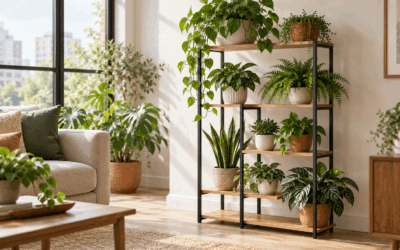
Open shelving with pots. A simple divider with open shelves lets light through and suits a row of small plants. Keep the heaviest pots on the lowest shelf.
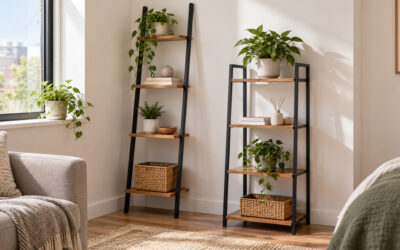
Ladder-style frame. Plants on stepped shelves give each one light from the side. Check the step depth so pots do not overhang.
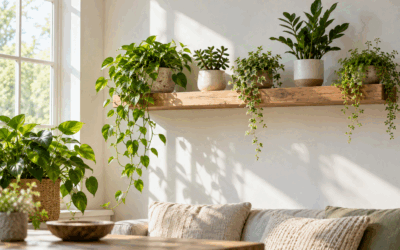
Frame with hanging planters. Hanging pots use the height of the room and leave the floor clear. Check the ceiling fixing and the weight of wet soil, and keep drips in mind.
Low planter row. A short divider with a planter bench at the base gives a green screen at seated height, and suits a room that needs light from both sides.
Common mistakes
- Placing the divider in dim light. Plants decline and the divider becomes a dust trap.
- Ignoring the wet weight. A divider loaded with soaked pots can tip or bend its shelves.
- No drip tray. Water stains and damp spread across the floor.
- Blocking the window. A tall divider can cut daylight to the whole room.
- Skipping the pet and child check. Some plants are unsafe to chew or eat.
- Placing it in a draught or next to a heater. Soil dries out and leaves get damaged.
Checklist
- Window direction and distance from the window checked
- Plant light needs read from each care label
- Divider placed so it does not block the window or the room’s daylight
- Total wet weight estimated for each shelf
- Floor pads and wall anchors planned
- Drip tray under every pot
- Watering route checked without moving the divider
- Pet and child safety checked for each plant
Frequently asked questions
How close to a window should plants on a divider sit?
Plants that need bright light should sit close to a bright window. Check each plant’s care label, because light needs vary.
Can a room divider hold wet plant pots?
Only if the load is within what the divider can take. Add up the weight of the wet pots and soil, check the shelf and frame, and keep heavy pots on the lower shelves.
Do I need a drip tray?
Yes, under each pot. Water runs out of the drainage hole, and a tray protects the shelf and the floor.
Is a plant divider safe for pets?
It depends on the plants. Check each plant’s safety information before you buy it, and keep any risky plant out of reach of pets and children.
Products to check, if they fit your space
These Amazon listings are optional, and the guide above works without buying anything. Check the listed size against your space first.
Ladder Shelf, Foldable Plant Shelf Stand, 3-Tier Bamboo Bookshelf, 39.4In
- Listed size: 14.96 x 23.62 x 39.37 inches
View on Amazon (Affiliate link)
Ladder Shelf 4-Tier Foldable Solid Wood Bookshelf Plant Stand
- Listed size: 16.3 x 13.8 x 44.3 inches
View on Amazon (Affiliate link)
HITNET Ladder Shelf, 4-Tier Bamboo Bookshelf, Freestanding Open Display Storage Rack, Space Saving Flower Plant Display Stand for Bathroom Living Room, Walnut
- Listed size: 12.6 x 20.87 x 49.21 inches
View on Amazon (Affiliate link)
Related guides
Disclosure: some links on this page are affiliate links. We may earn a commission if you buy through them, at no extra cost to you. We do not show prices or star ratings here, so check the current figures on Amazon. The measurements in this guide are general guidance to check against your room, not product specifications.